 1 / 11
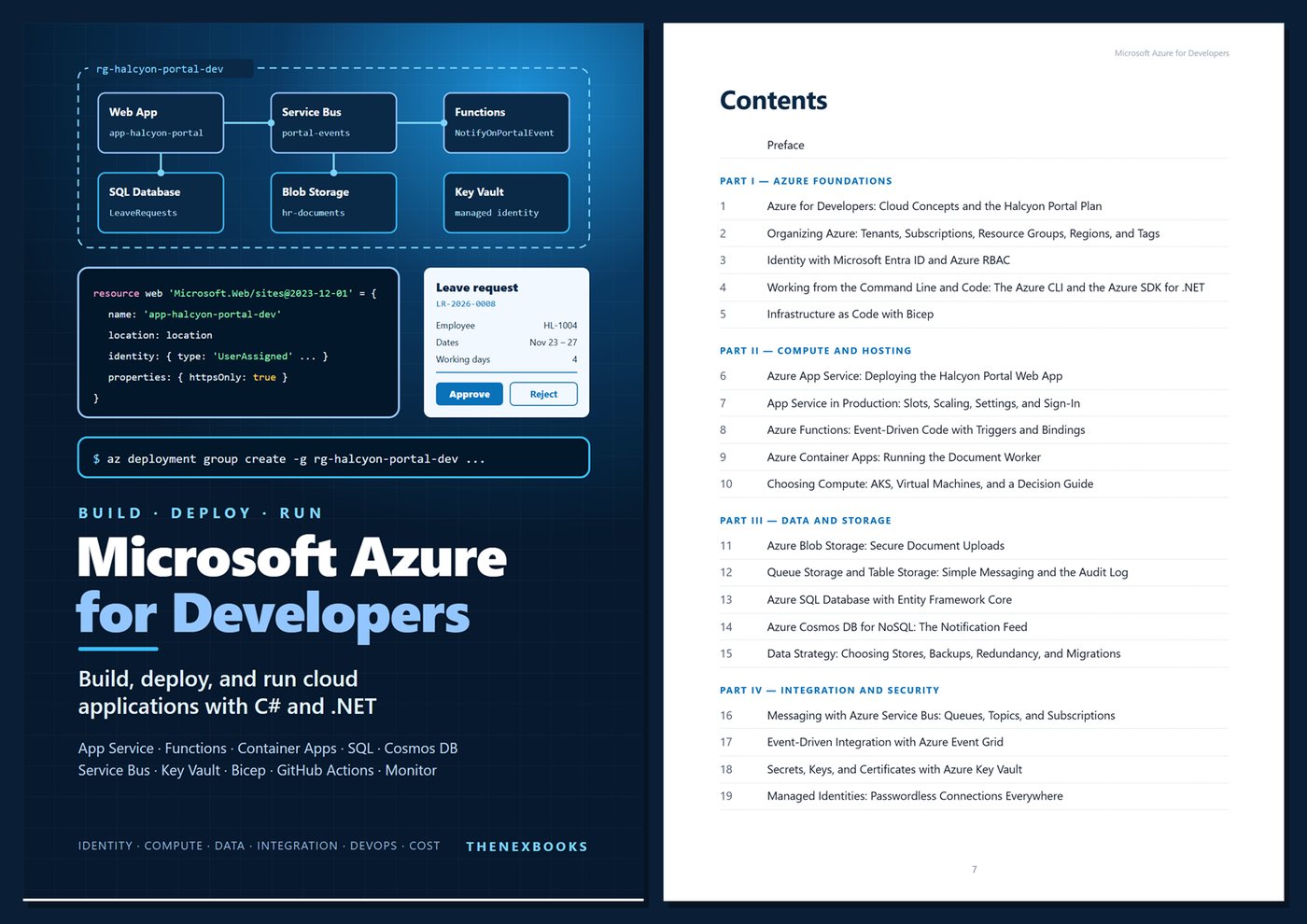
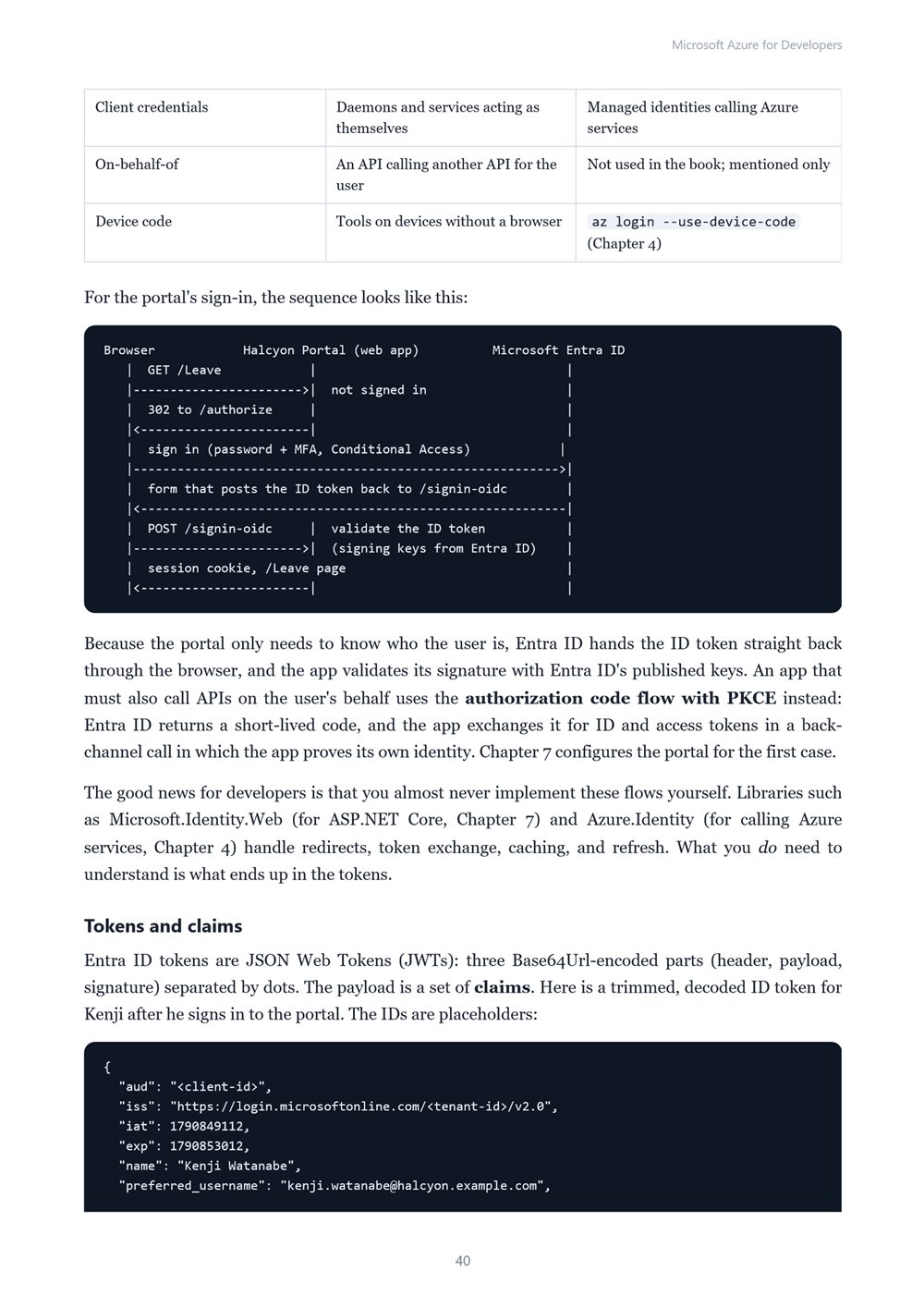
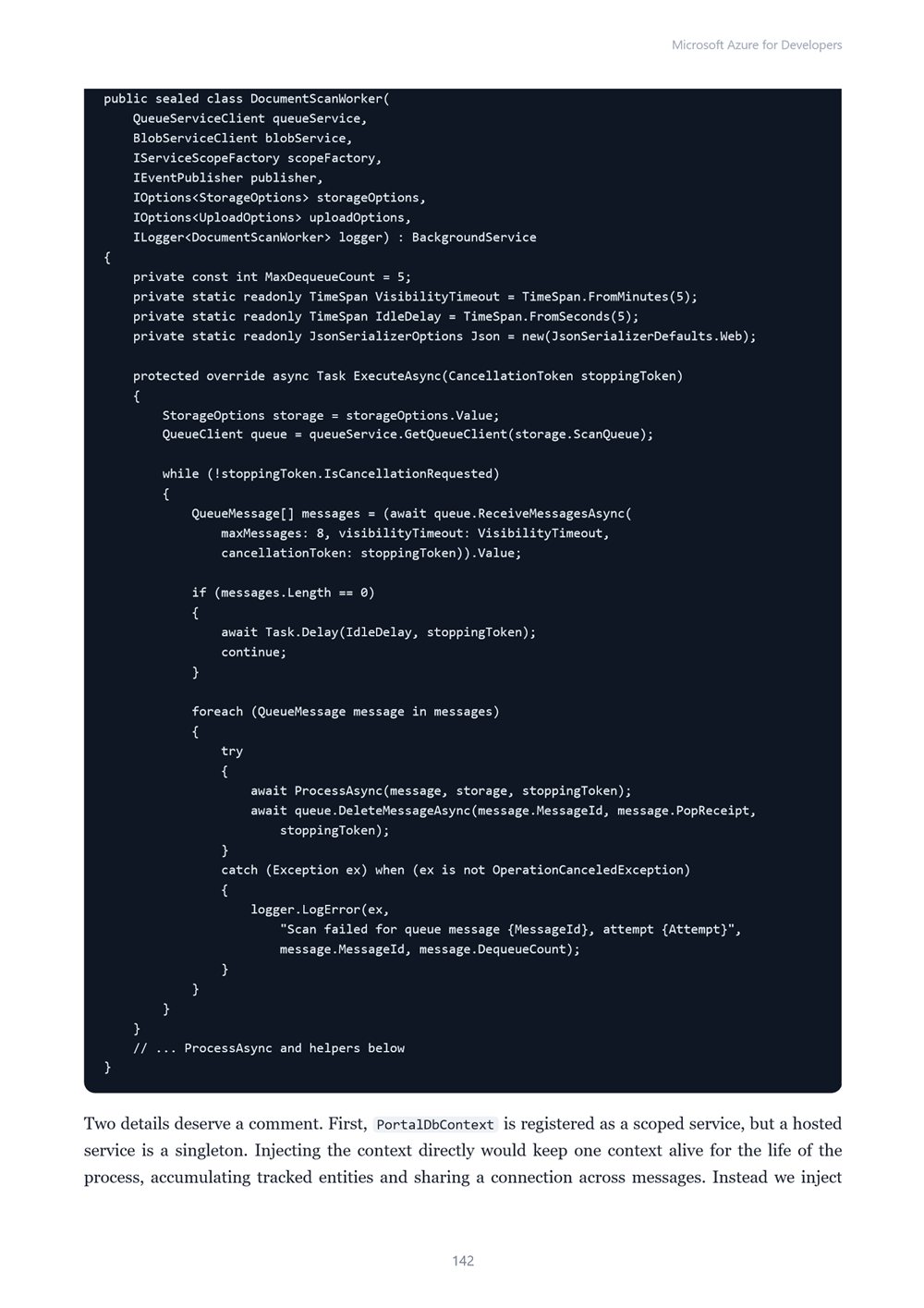
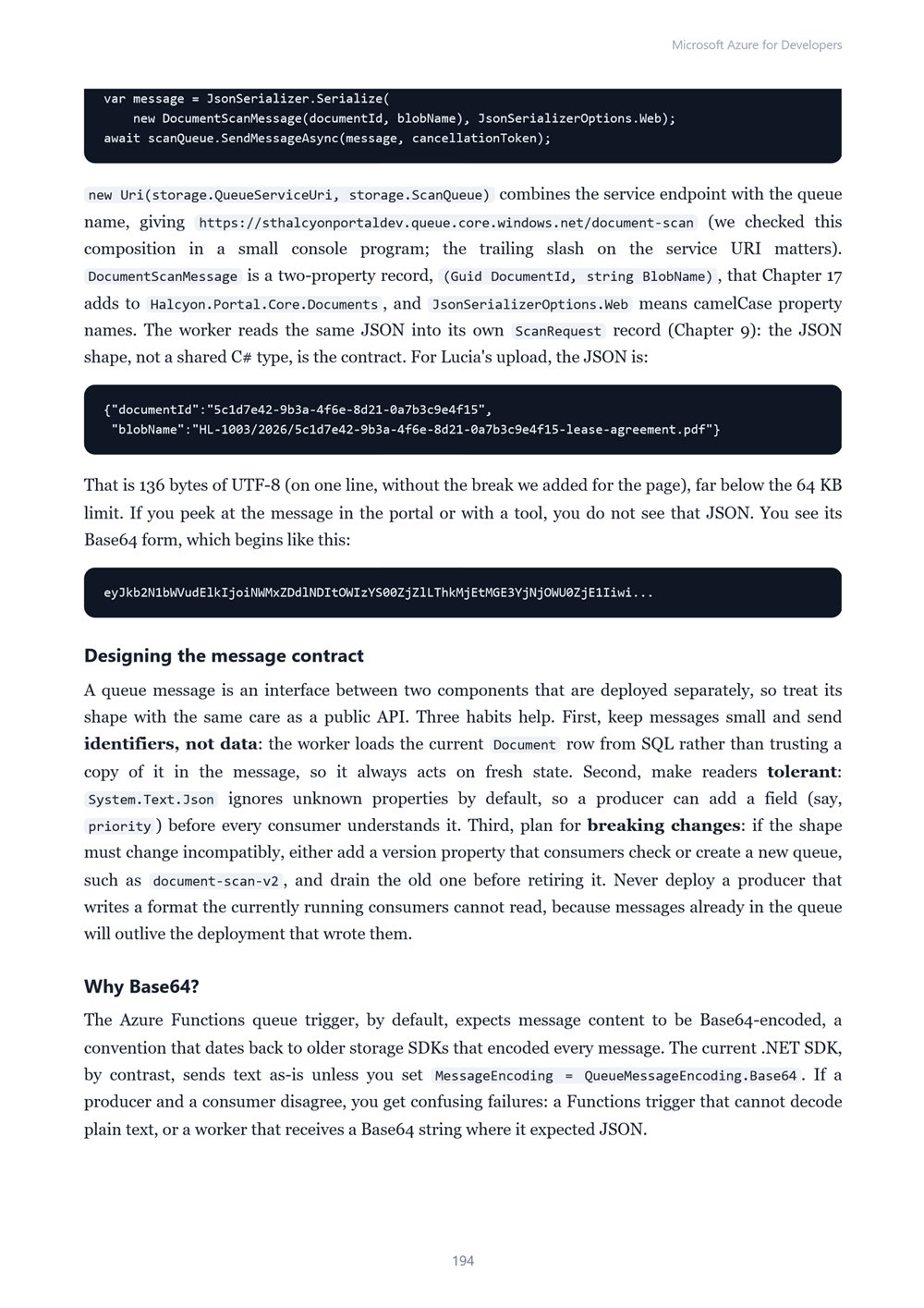
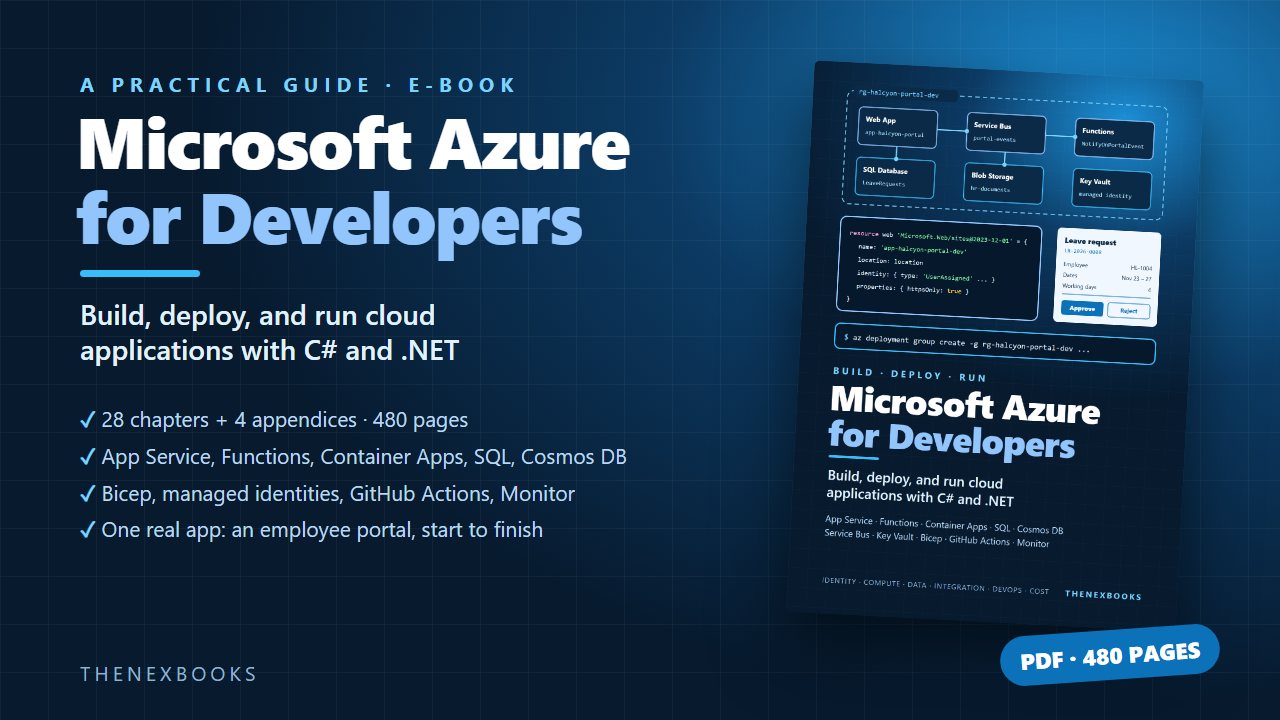
Learn Microsoft Azure as a developer and build one complete cloud application from an empty subscription to production: subscriptions and resource groups, Microsoft Entra ID and RBAC, the Azure CLI and SDK for .NET, Bicep, App Service, Azure Functions, Container Apps, Blob/Queue/Table Storage…
Build, Deploy, and Run Cloud Applications
Read before you buy: the PDF here is a free sample — the first 20 pages of the 480-page book (payments, sales and reviews on this demo site are sample data). Get the full e-book at thenexbooks on Gumroad.
Stop clicking around the portal. Learn how Azure really fits together — and ship a real application on it.
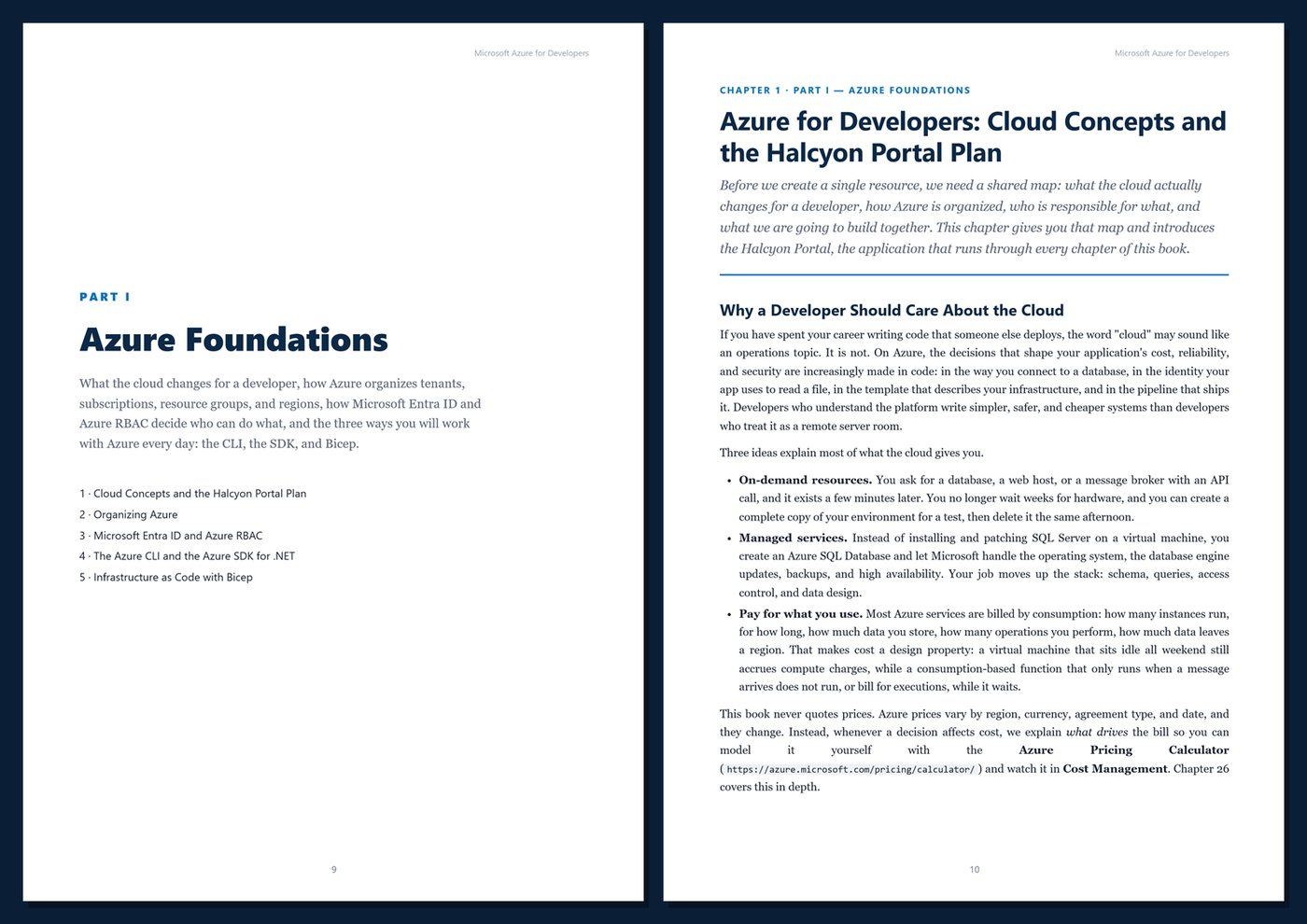
Azure has hundreds of services and several ways to do everything. Most tutorials show you how to create one resource; very few show how to connect services securely, describe them as code, deploy them from a pipeline, watch them in production, and keep the bill under control. This book does exactly that, from a developer's point of view.
You build one realistic system step by step, and each service appears at the moment it solves a problem you actually have. The main code is C# and .NET, with short Python and Node.js equivalents where they help, so you learn patterns you can apply in any language.
What's inside
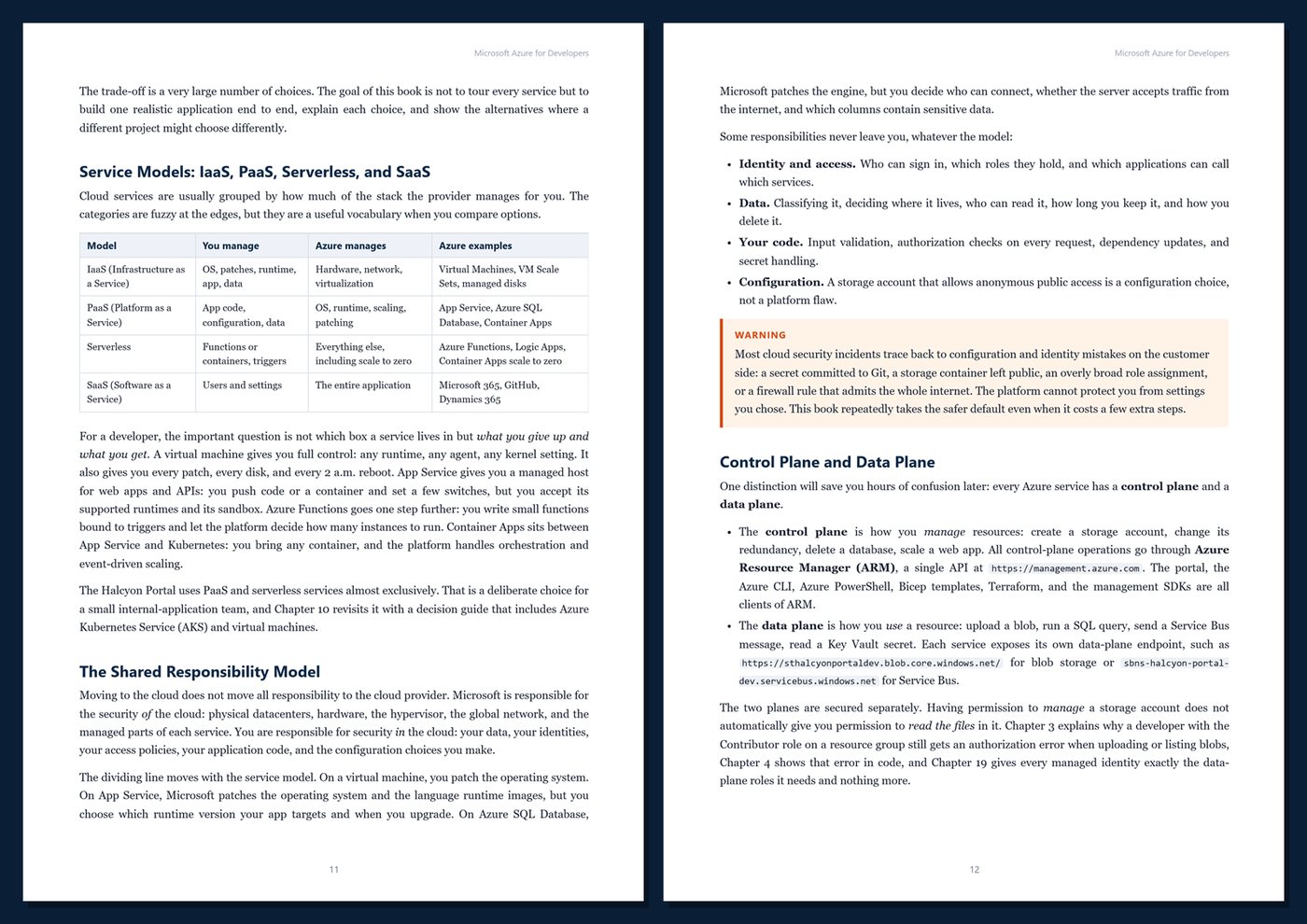
- How Azure is organized: tenants, subscriptions, resource groups, regions, availability zones, tags, and a naming convention that scales
- Microsoft Entra ID (formerly Azure Active Directory), app registrations, app roles, and Azure RBAC — control plane versus data plane explained clearly
- The Azure CLI and the Azure SDK for .NET, including DefaultAzureCredential and local development without secrets
- Infrastructure as code with Bicep: modules, parameter files, what-if, and a reusable template set (with Terraform mentioned as an alternative)
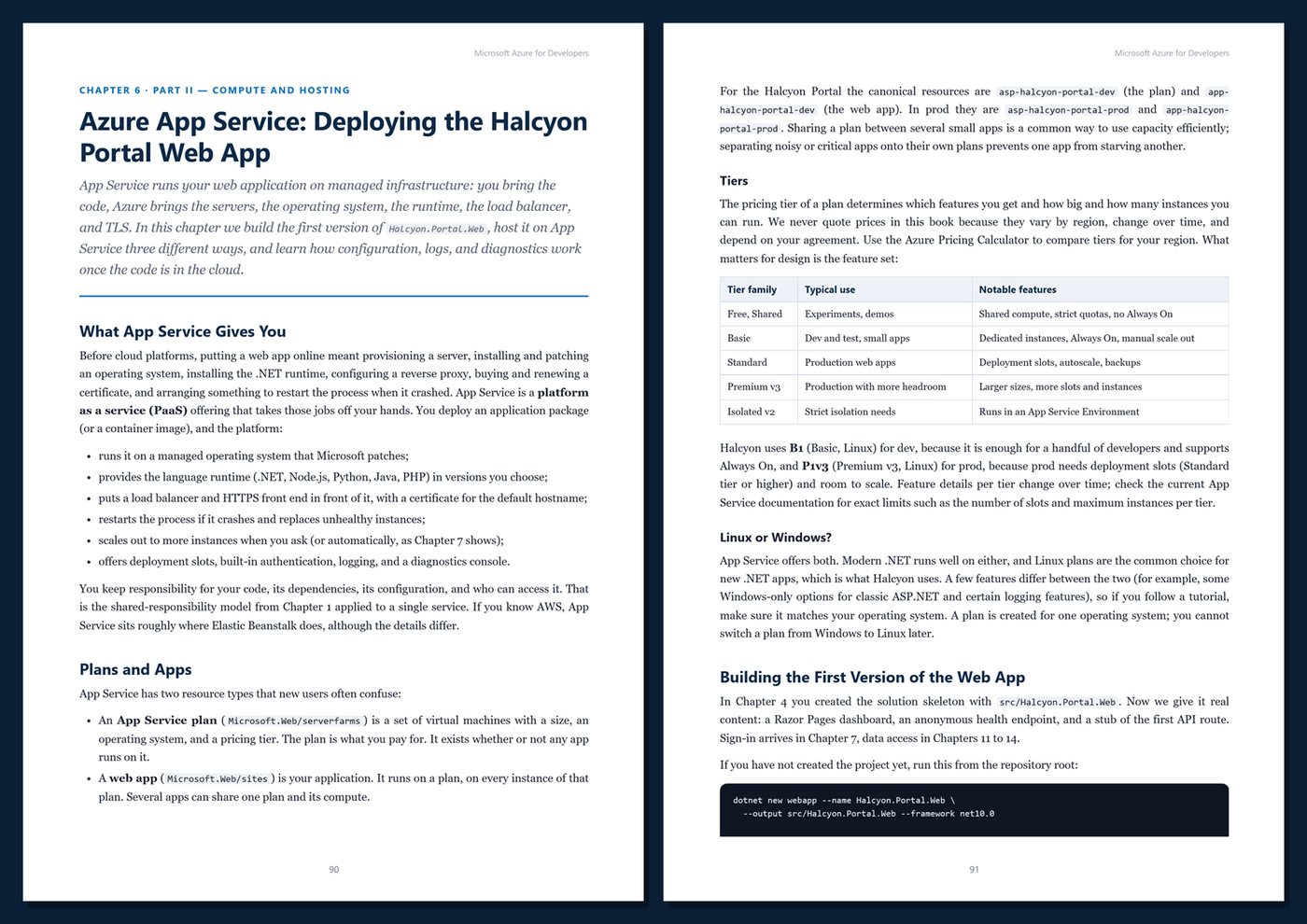
- Hosting on App Service with deployment slots, autoscale, health checks, and sign-in; Azure Functions with the isolated worker model; Azure Container Apps with queue-based scaling; and when AKS or virtual machines make sense
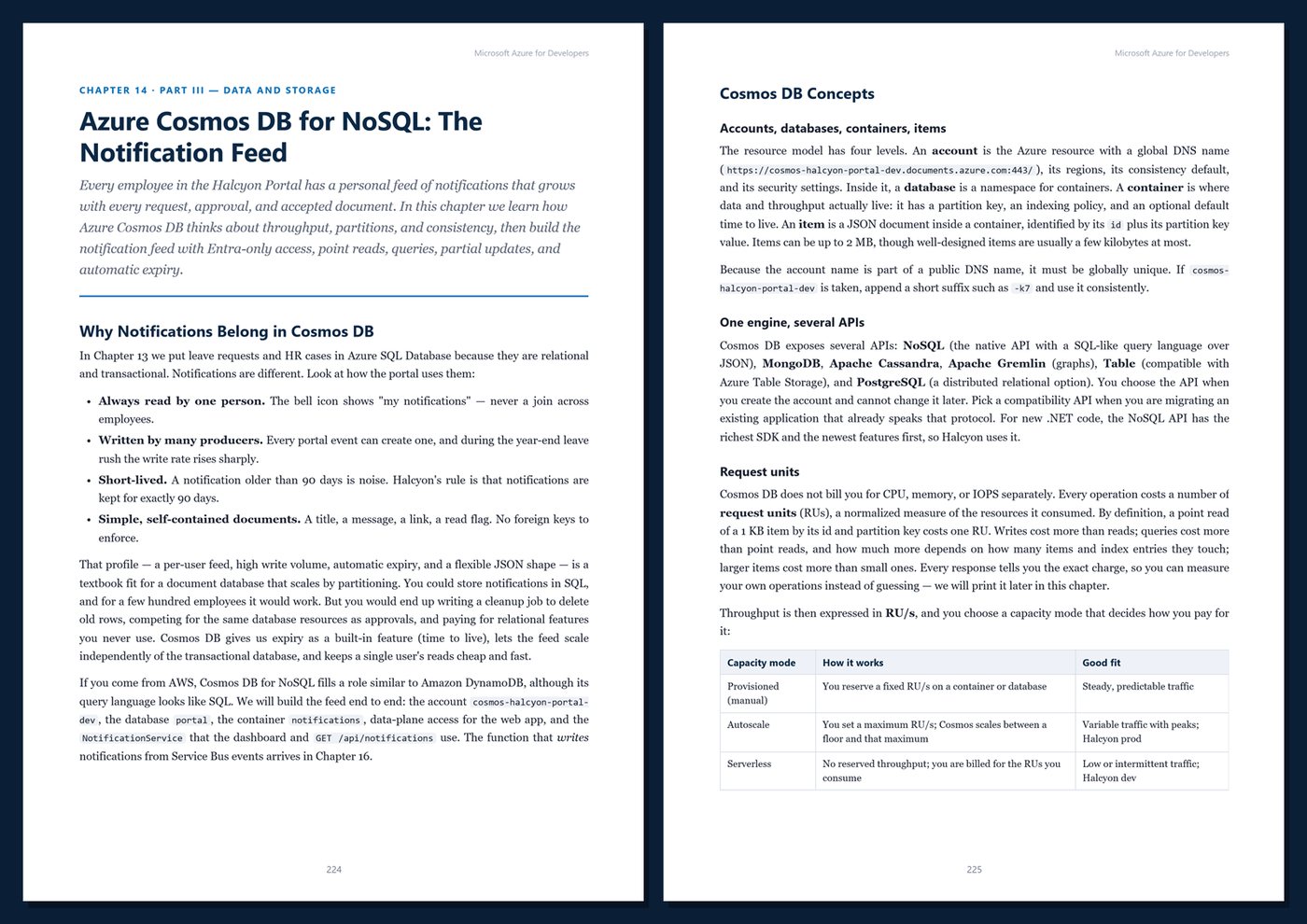
- Data: secure browser uploads to Blob Storage with user delegation SAS, Queue and Table Storage, Azure SQL Database with EF Core migrations, Cosmos DB modeling and TTL, backups, redundancy, and restore
- Integration: Service Bus topics, filters, and dead-letter queues; Event Grid system topics; idempotent consumers
- Security without passwords: Key Vault, managed identities everywhere, and App Configuration with feature flags
- Operations: Azure Monitor, Application Insights with OpenTelemetry, KQL queries, alerts, and availability tests
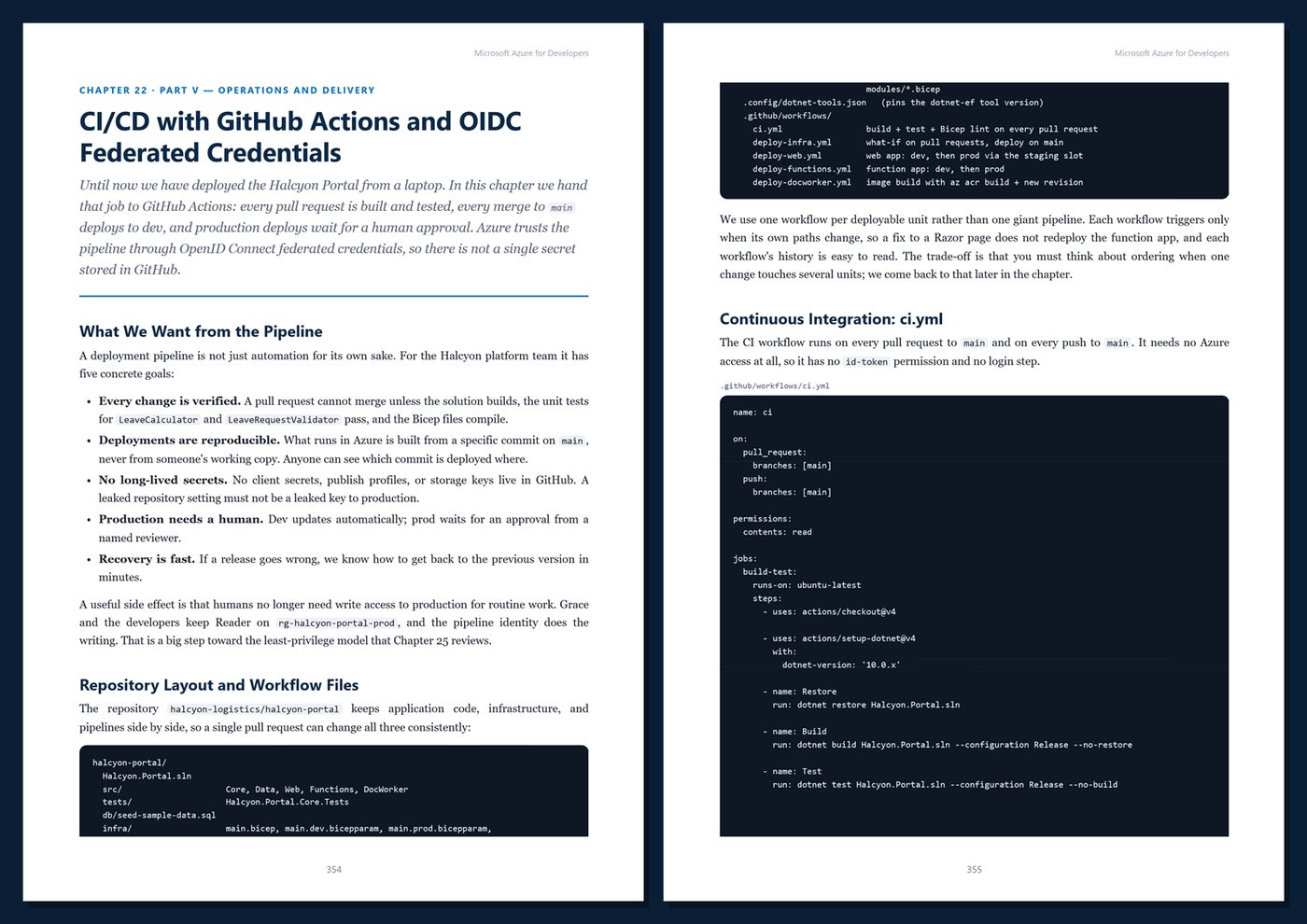
- CI/CD with GitHub Actions and OIDC federated credentials — no stored cloud secrets
- API Management, virtual networks, private endpoints, Defender for Cloud, Azure Policy, budgets, the Pricing Calculator, and the Well-Architected Framework
- A complete production go-live case study with runbooks
One running example, start to finish. You build the Halcyon Portal, the internal employee portal of a fictional logistics company: leave requests and approvals, HR requests, document uploads, and notifications. It grows from a single web app into a production-ready system with App Service, Functions, a containerized document worker, Azure SQL, Cosmos DB, Storage, Service Bus, Event Grid, Key Vault, App Configuration, Application Insights, API Management, private networking, and a GitHub Actions pipeline — all defined in Bicep and connected with managed identities. The sample data is small enough to check by hand, and every business rule is spelled out.
Current and honest. Azure changes constantly, so the book says "at the time of writing" where details may drift, labels preview features as preview, and never quotes prices — instead it teaches what drives cost and how to estimate your own with the Azure Pricing Calculator and Cost Management. It contains no invented benchmarks or statistics. Every chapter includes step-by-step instructions, code, Tips, Notes, Warnings, Try It Yourself exercises, and Key Takeaways, and the appendices give you a CLI and Bicep cheat sheet, templates and a service reference, a production checklist, and a glossary.
Format: PDF, 480 pages (A4), linked table of contents and bookmarks. English. First Edition, 2026. Published by thenexbooks. This book is independent and is not affiliated with, sponsored by, or endorsed by Microsoft Corporation.
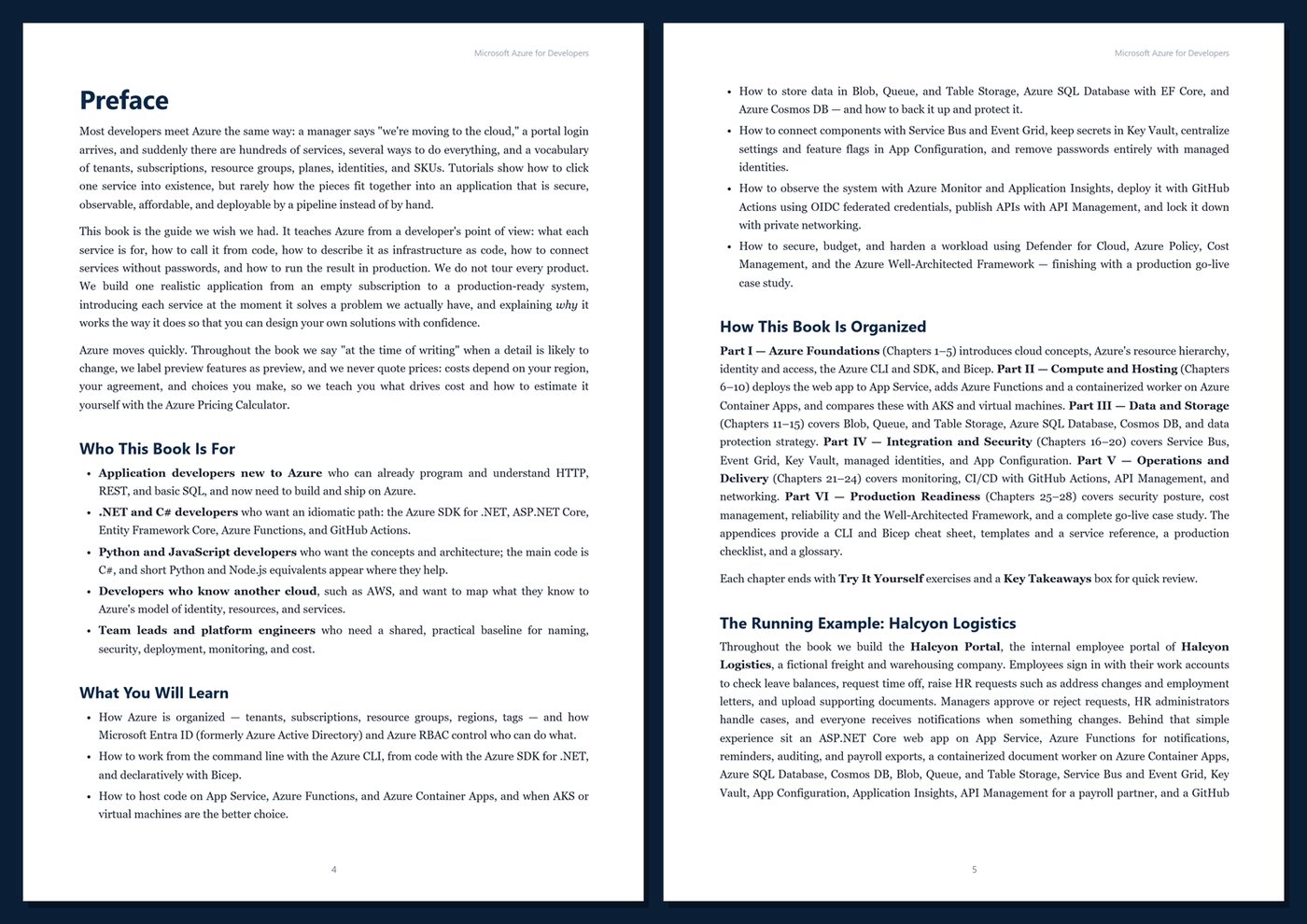
Table of Contents
Part I — Azure Foundations
- Ch 1 · Azure for Developers: Cloud Concepts and the Halcyon Portal Plan
- Ch 2 · Organizing Azure: Tenants, Subscriptions, Resource Groups, Regions, and Tags
- Ch 3 · Identity with Microsoft Entra ID and Azure RBAC
- Ch 4 · Working from the Command Line and Code: The Azure CLI and the Azure SDK for .NET
- Ch 5 · Infrastructure as Code with Bicep
Part II — Compute and Hosting
- Ch 6 · Azure App Service: Deploying the Halcyon Portal Web App
- Ch 7 · App Service in Production: Slots, Scaling, Settings, and Sign-In
- Ch 8 · Azure Functions: Event-Driven Code with Triggers and Bindings
- Ch 9 · Azure Container Apps: Running the Document Worker
- Ch 10 · Choosing Compute: AKS, Virtual Machines, and a Decision Guide
Part III — Data and Storage
- Ch 11 · Azure Blob Storage: Secure Document Uploads
- Ch 12 · Queue Storage and Table Storage: Simple Messaging and the Audit Log
- Ch 13 · Azure SQL Database with Entity Framework Core
- Ch 14 · Azure Cosmos DB for NoSQL: The Notification Feed
- Ch 15 · Data Strategy: Choosing Stores, Backups, Redundancy, and Migrations
Part IV — Integration and Security
- Ch 16 · Messaging with Azure Service Bus: Queues, Topics, and Subscriptions
- Ch 17 · Event-Driven Integration with Azure Event Grid
- Ch 18 · Secrets, Keys, and Certificates with Azure Key Vault
- Ch 19 · Managed Identities: Passwordless Connections Everywhere
- Ch 20 · Configuration and Feature Flags with Azure App Configuration
Part V — Operations and Delivery
- Ch 21 · Observability with Azure Monitor and Application Insights
- Ch 22 · CI/CD with GitHub Actions and OIDC Federated Credentials
- Ch 23 · Publishing APIs with Azure API Management
- Ch 24 · Networking Basics: Virtual Networks, Private Endpoints, and Secure Ingress
Part VI — Production Readiness
- Ch 25 · Securing Your Azure Workloads: Defender for Cloud, Azure Policy, and Least Privilege
- Ch 26 · Cost Management: Budgets, the Pricing Calculator, and Cost-Aware Design
- Ch 27 · Reliability and the Azure Well-Architected Framework
- Ch 28 · Case Study: Taking the Halcyon Portal to Production
Appendices
A · Azure CLI and Bicep Cheat Sheet
B · Templates and Service Reference
C · Production Checklist
D · Glossary
Book details
| Detail | |
|---|---|
| Pages | 480 |
| Format | PDF (A4) |
| Language | English |
| Level | Beginner to Intermediate |
| Edition | 1st Edition (2026) |
| Download on this site | Free sample, first 20 pages (PDF) |
| Publisher | thenexbooks |
Files you get
No reviews yet. Only buyers can review.
More from thenexbooks