 1 / 11
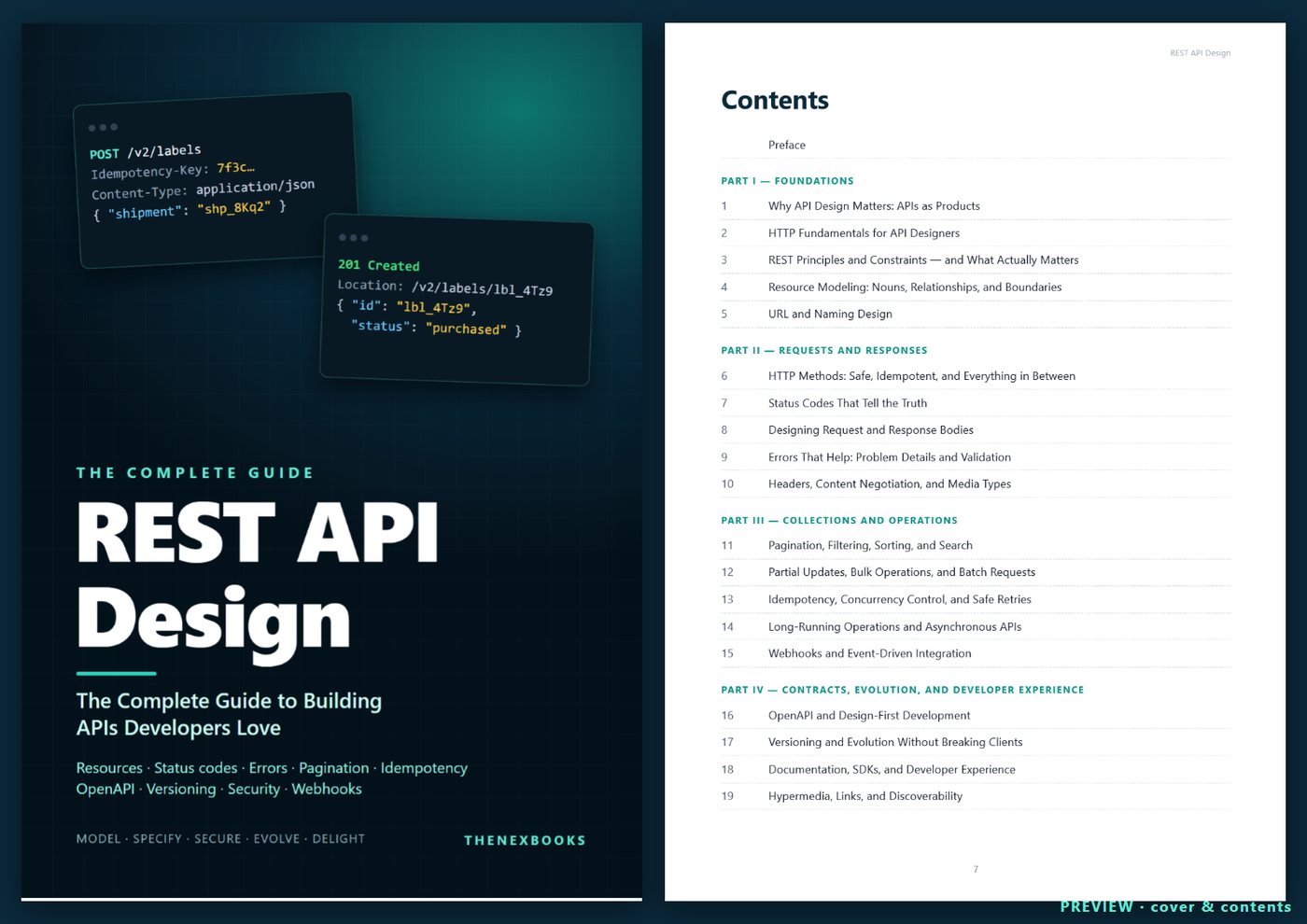
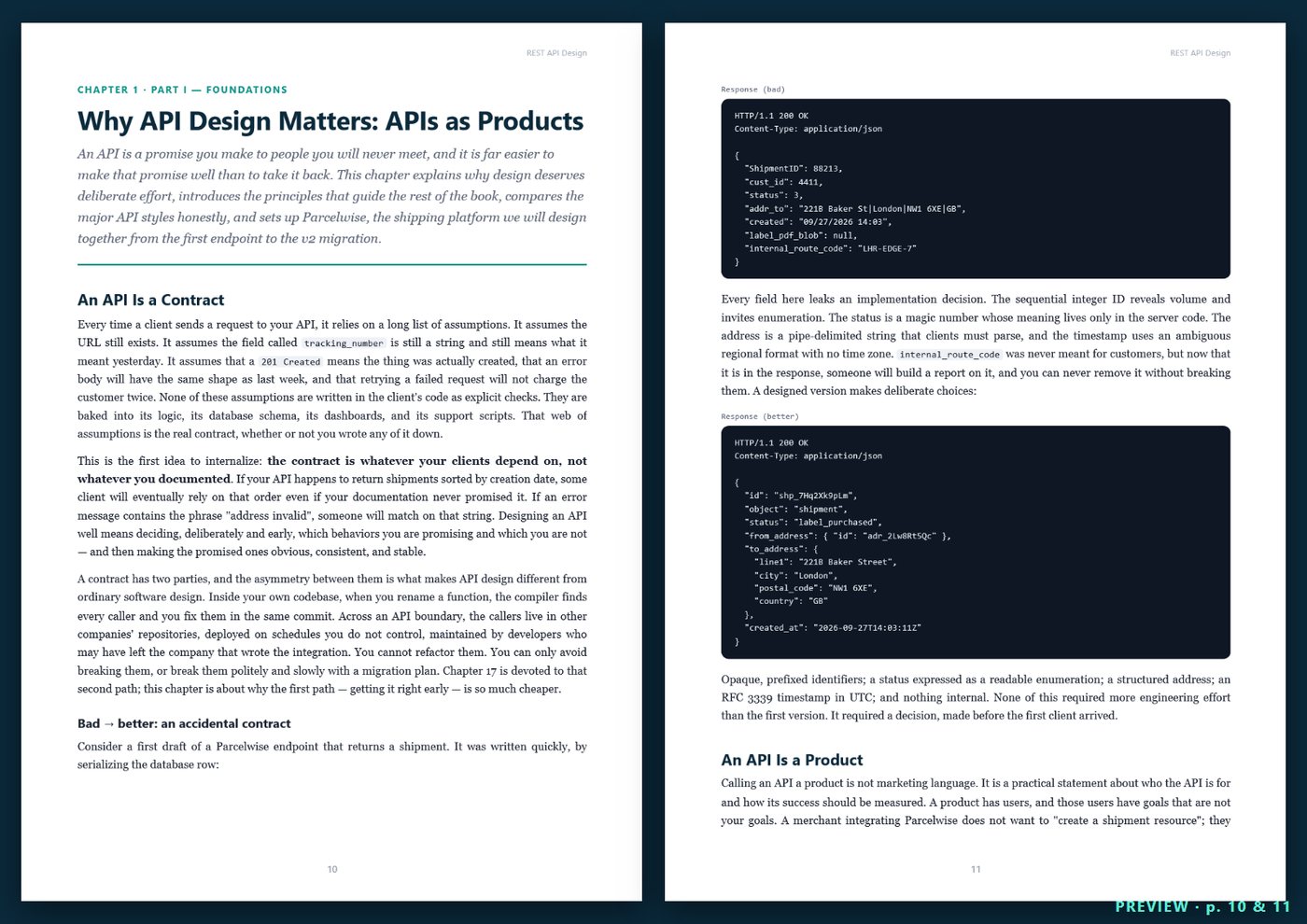
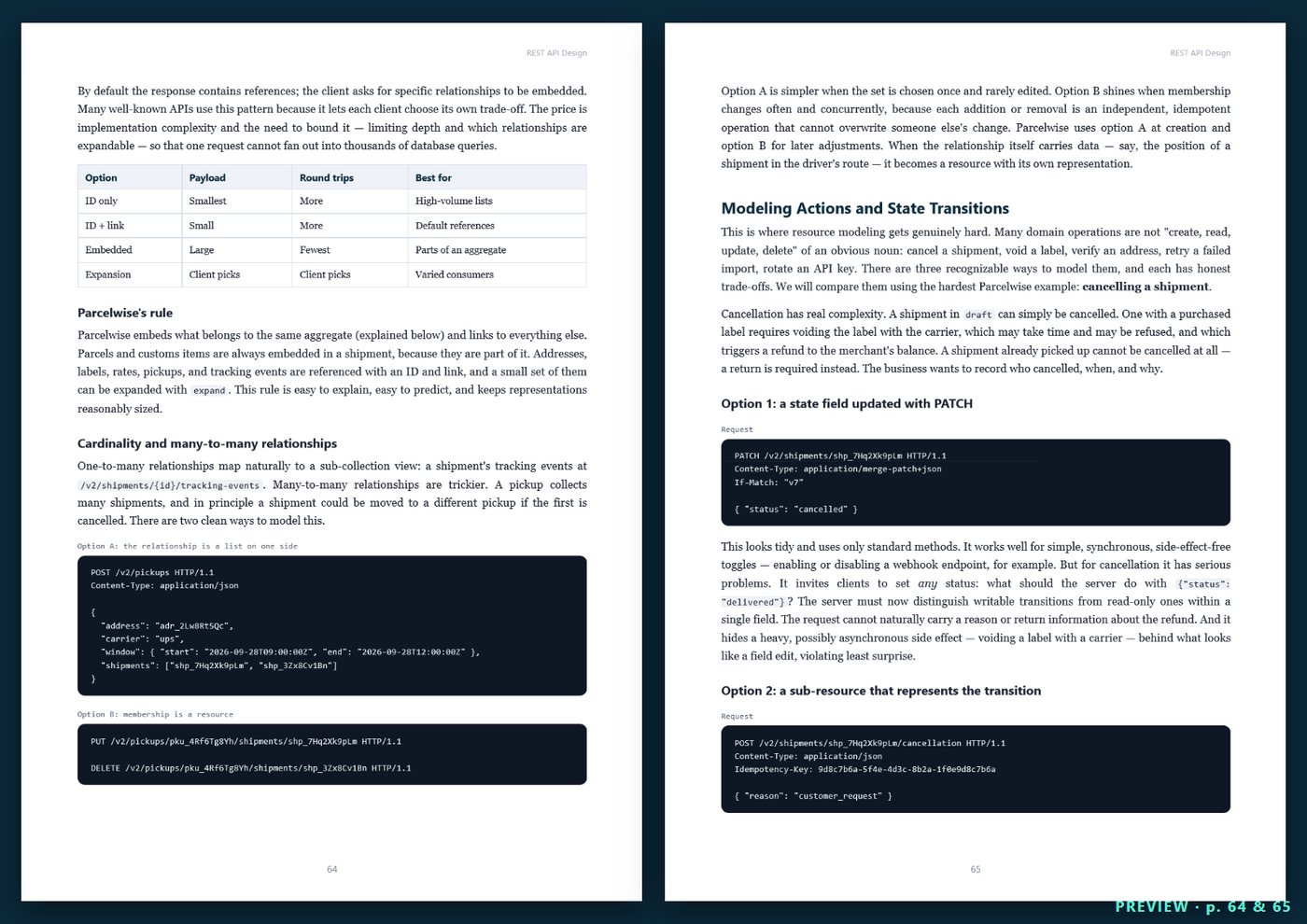
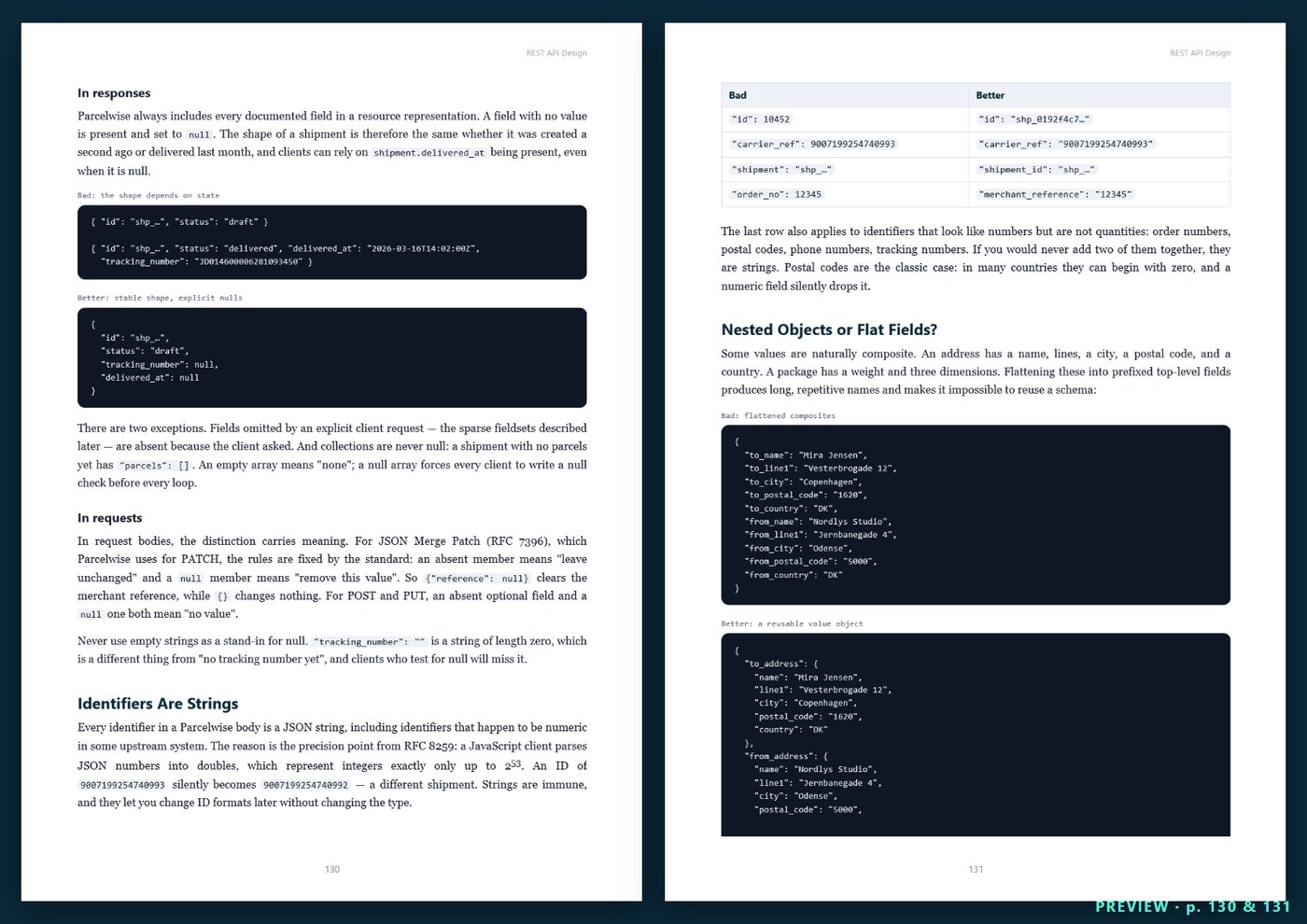
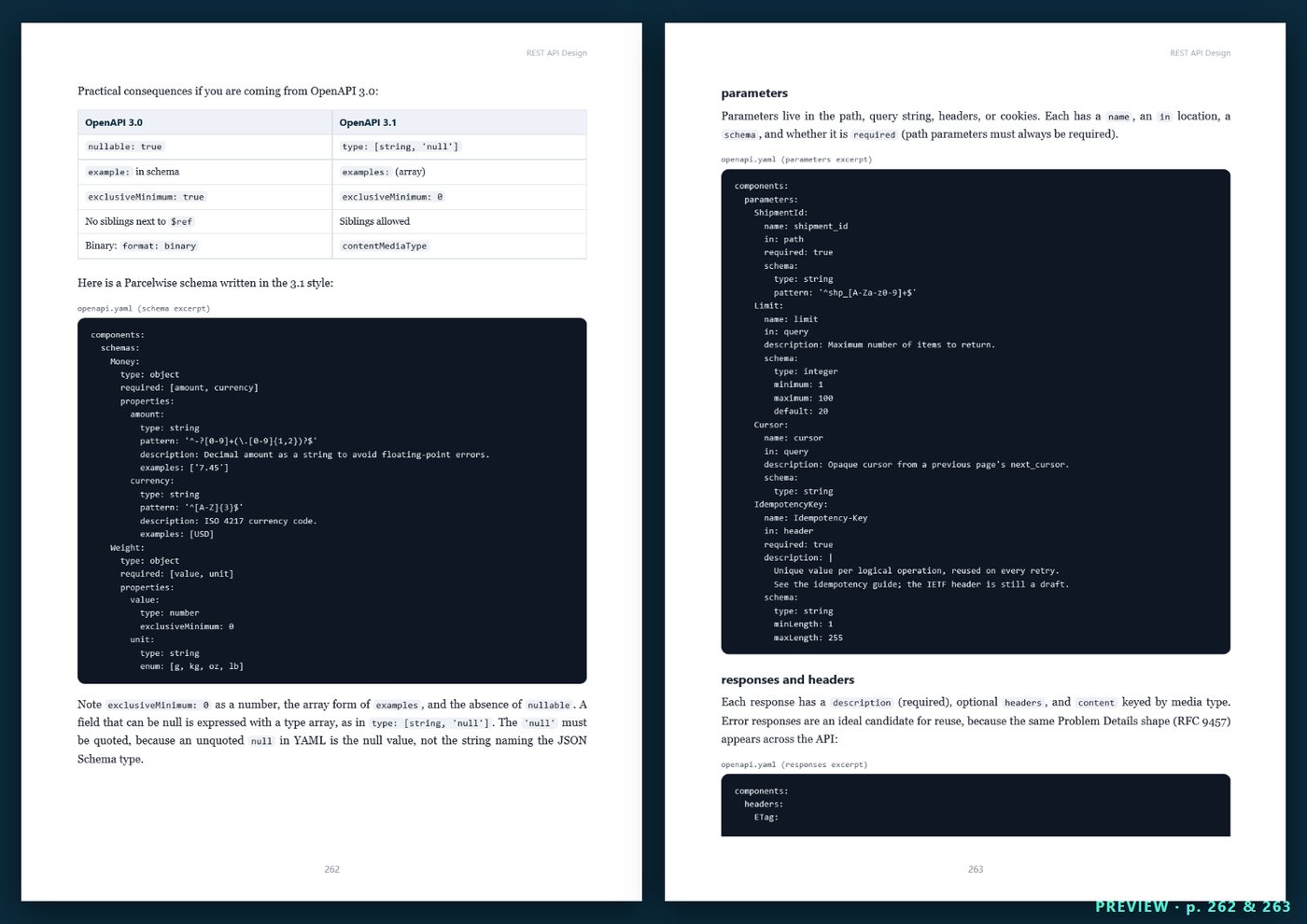
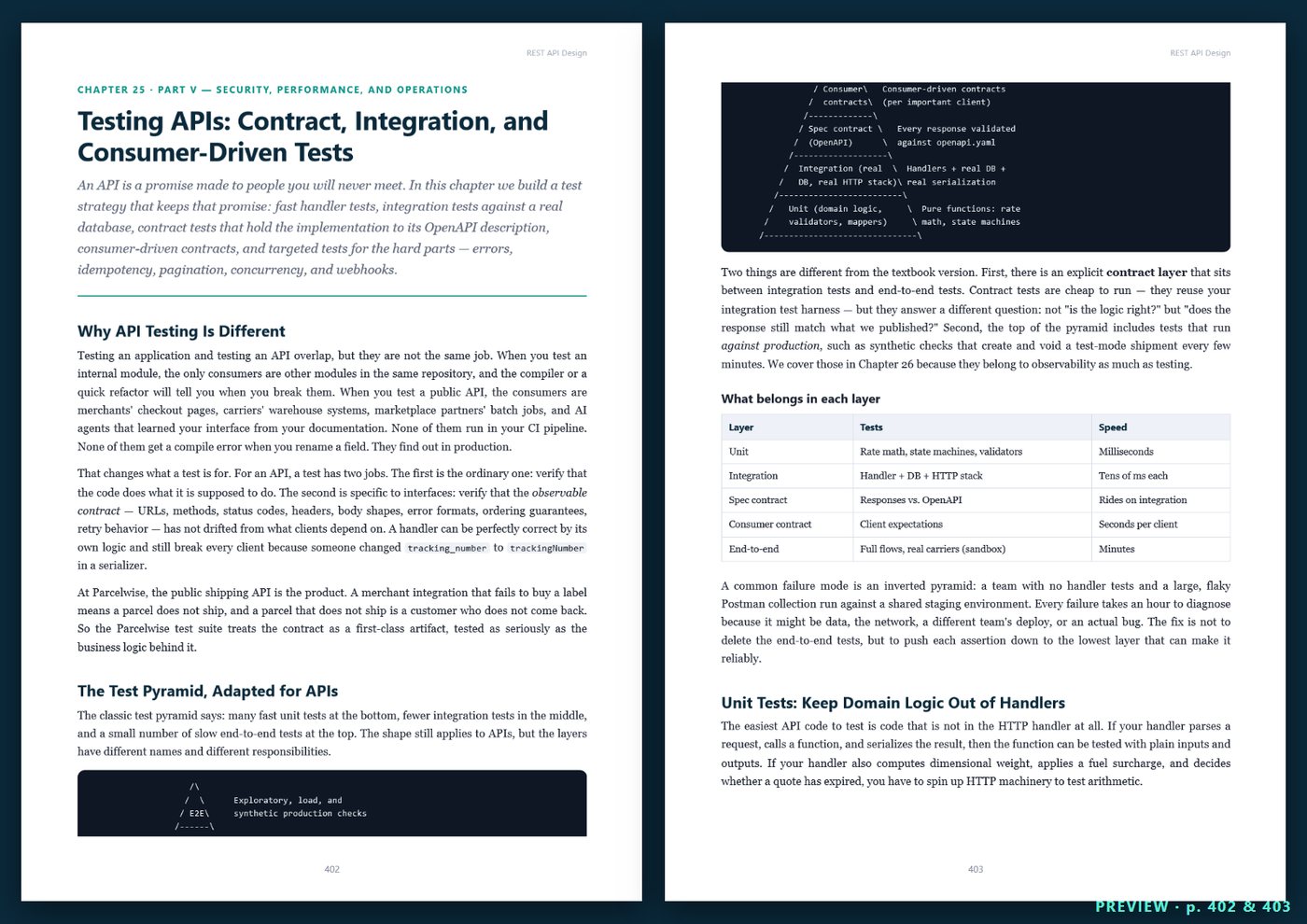
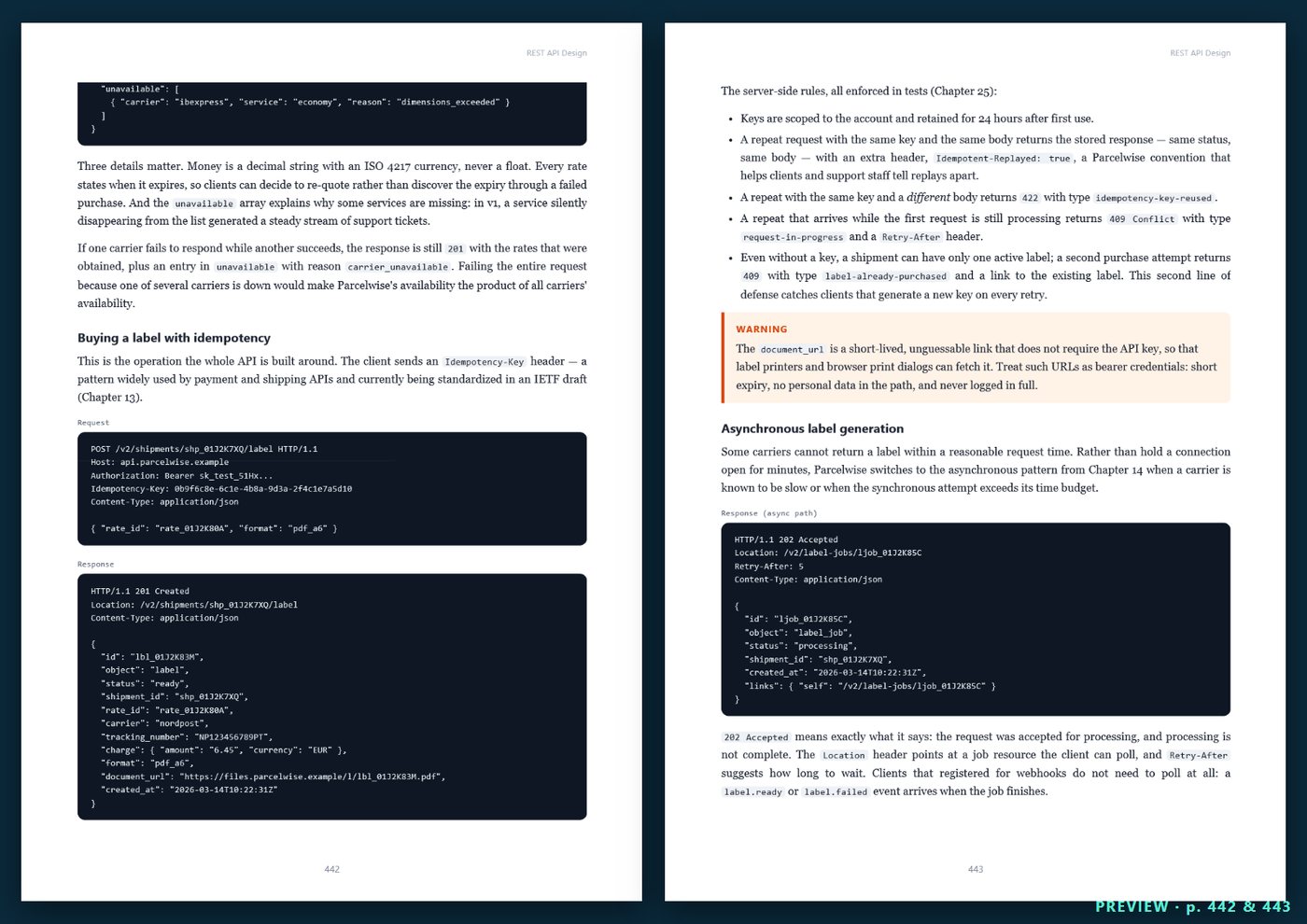
A 482-page, standards-based guide to designing HTTP APIs developers love: resources, methods, status codes, Problem Details errors, pagination, idempotency, webhooks, OpenAPI, versioning, security, and caching.
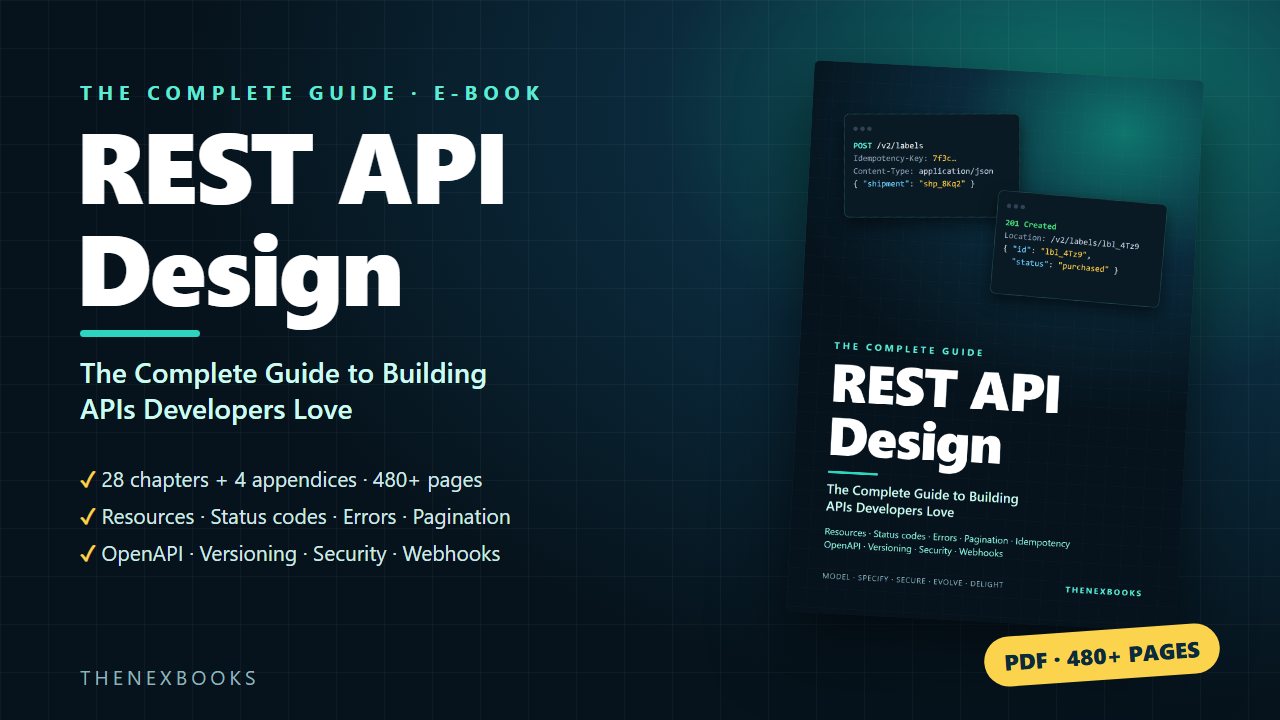
The Complete Guide to Building APIs Developers Love
Read before you buy: the PDF here is a free sample — the first 20 pages of the 482-page book (payments, sales and reviews on this demo site are sample data). Get the full e-book at thenexbooks on Gumroad.
Every API is a promise. This book shows you how to make that promise well — with consistent resources, honest status codes, helpful errors, safe retries, and changes that never break your clients.
REST API Design is a practical, opinionated, standards-based guide (RFC 9110, RFC 9457, OpenAPI 3.1 and more) with hundreds of bad → better examples, raw HTTP exchanges, OpenAPI YAML, and FastAPI/Express snippets. One running example — Parcelwise, a shipping and parcel-tracking platform — carries every chapter, from the first endpoint to a complete public API and a v1 → v2 migration.
What's inside (28 chapters + 4 appendices, 482 pages):
Part I — Foundations
- Ch 1 · Why API Design Matters: APIs as Products
- Ch 2 · HTTP Fundamentals for API Designers
- Ch 3 · REST Principles and Constraints — and What Actually Matters
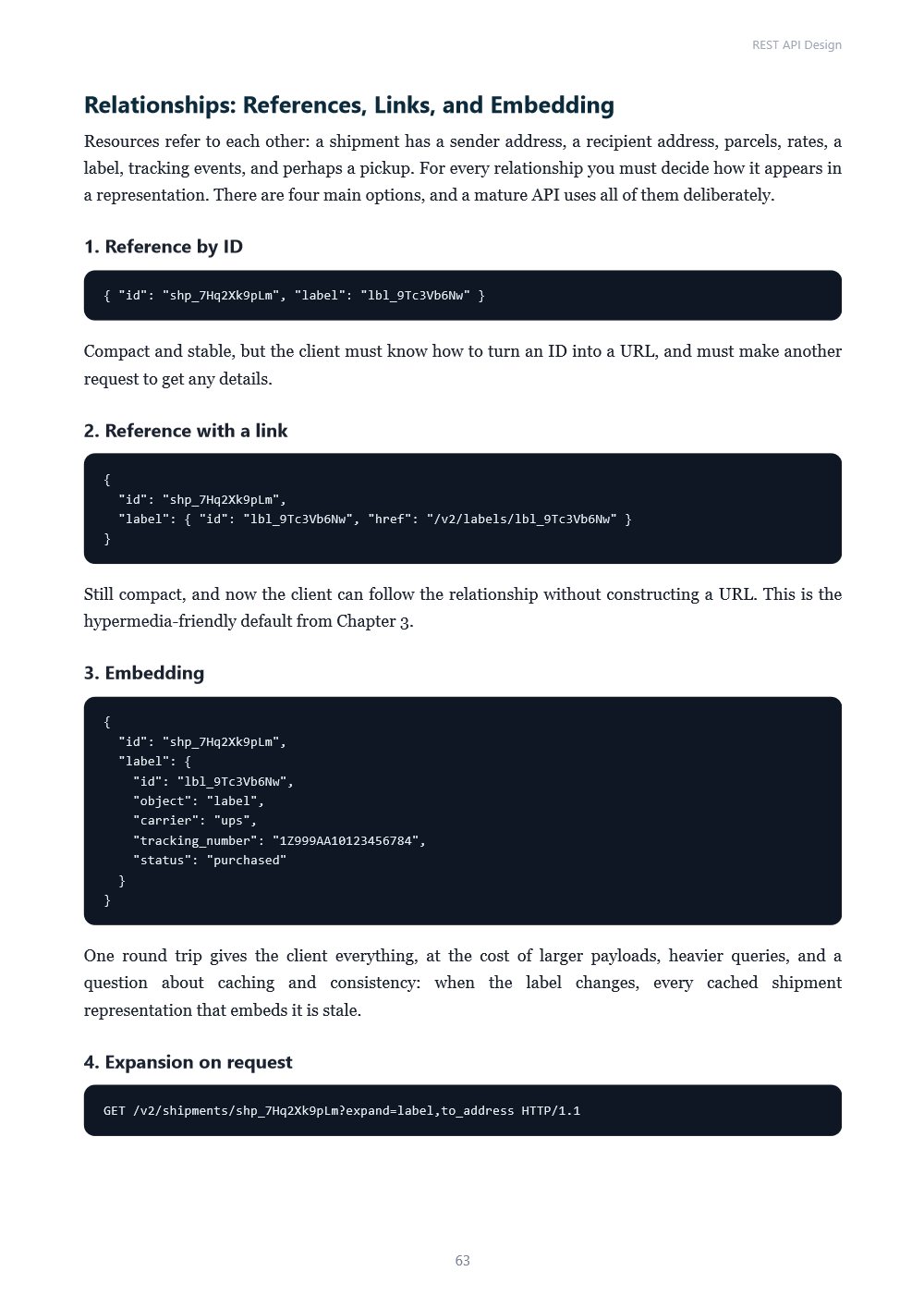
- Ch 4 · Resource Modeling: Nouns, Relationships, and Boundaries
- Ch 5 · URL and Naming Design
Part II — Requests and Responses
- Ch 6 · HTTP Methods: Safe, Idempotent, and Everything in Between
- Ch 7 · Status Codes That Tell the Truth
- Ch 8 · Designing Request and Response Bodies
- Ch 9 · Errors That Help: Problem Details and Validation
- Ch 10 · Headers, Content Negotiation, and Media Types
Part III — Collections and Operations
- Ch 11 · Pagination, Filtering, Sorting, and Search
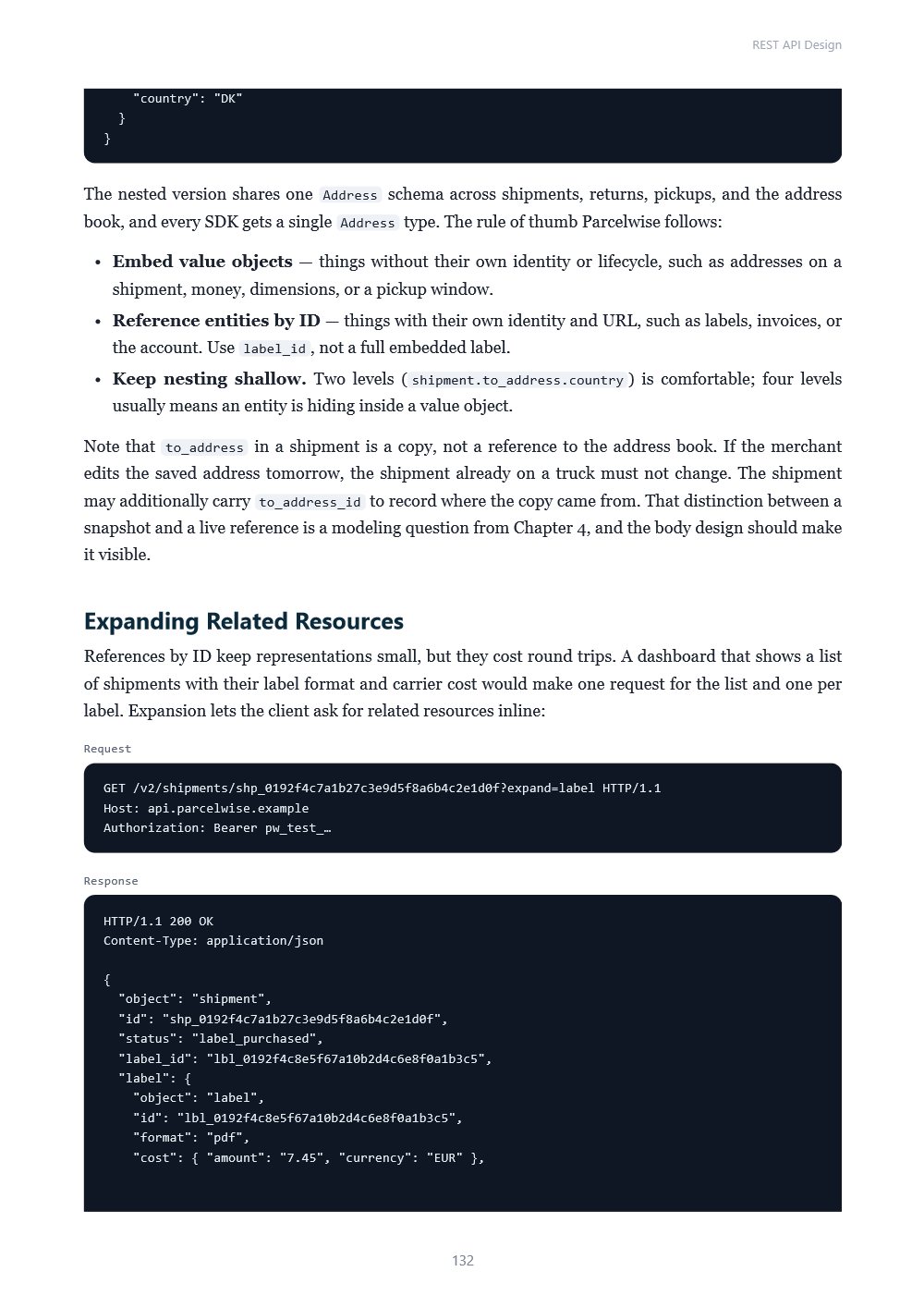
- Ch 12 · Partial Updates, Bulk Operations, and Batch Requests
- Ch 13 · Idempotency, Concurrency Control, and Safe Retries
- Ch 14 · Long-Running Operations and Asynchronous APIs
- Ch 15 · Webhooks and Event-Driven Integration
Part IV — Contracts, Evolution, and Developer Experience
- Ch 16 · OpenAPI and Design-First Development
- Ch 17 · Versioning and Evolution Without Breaking Clients
- Ch 18 · Documentation, SDKs, and Developer Experience
- Ch 19 · Hypermedia, Links, and Discoverability
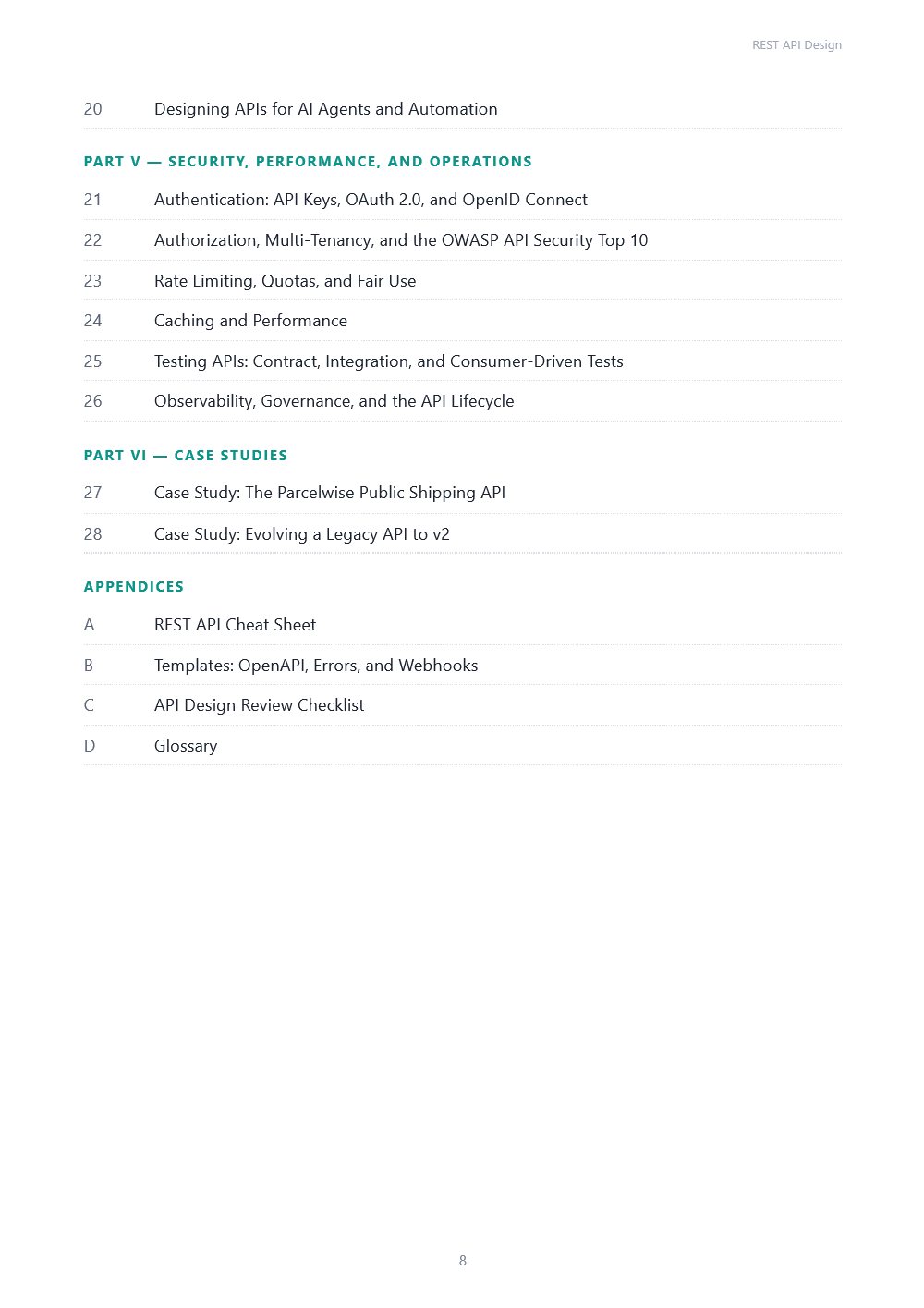
- Ch 20 · Designing APIs for AI Agents and Automation
Part V — Security, Performance, and Operations
- Ch 21 · Authentication: API Keys, OAuth 2.0, and OpenID Connect
- Ch 22 · Authorization, Multi-Tenancy, and the OWASP API Security Top 10
- Ch 23 · Rate Limiting, Quotas, and Fair Use
- Ch 24 · Caching and Performance
- Ch 25 · Testing APIs: Contract, Integration, and Consumer-Driven Tests
- Ch 26 · Observability, Governance, and the API Lifecycle
Part VI — Case Studies
- Ch 27 · Case Study: The Parcelwise Public Shipping API
- Ch 28 · Case Study: Evolving a Legacy API to v2
Appendices: A. REST API Cheat Sheet · B. Templates (OpenAPI, Errors, Webhooks) · C. API Design Review Checklist · D. Glossary
Who it's for: backend developers, API designers, tech leads, and architects who build public, partner, or internal HTTP APIs.
Format: PDF (A4), 482 pages, clickable table of contents and bookmarks. Published by thenexbooks.
Book details
| Detail | |
|---|---|
| Pages | 482 |
| Format | PDF (A4) |
| Language | English |
| Level | Intermediate to Advanced |
| Edition | 1st Edition, 2026 |
| Download on this site | Free sample, first 20 pages (PDF) |
| Publisher | thenexbooks |
Files you get
No reviews yet. Only buyers can review.
More from thenexbooks