 1 / 11
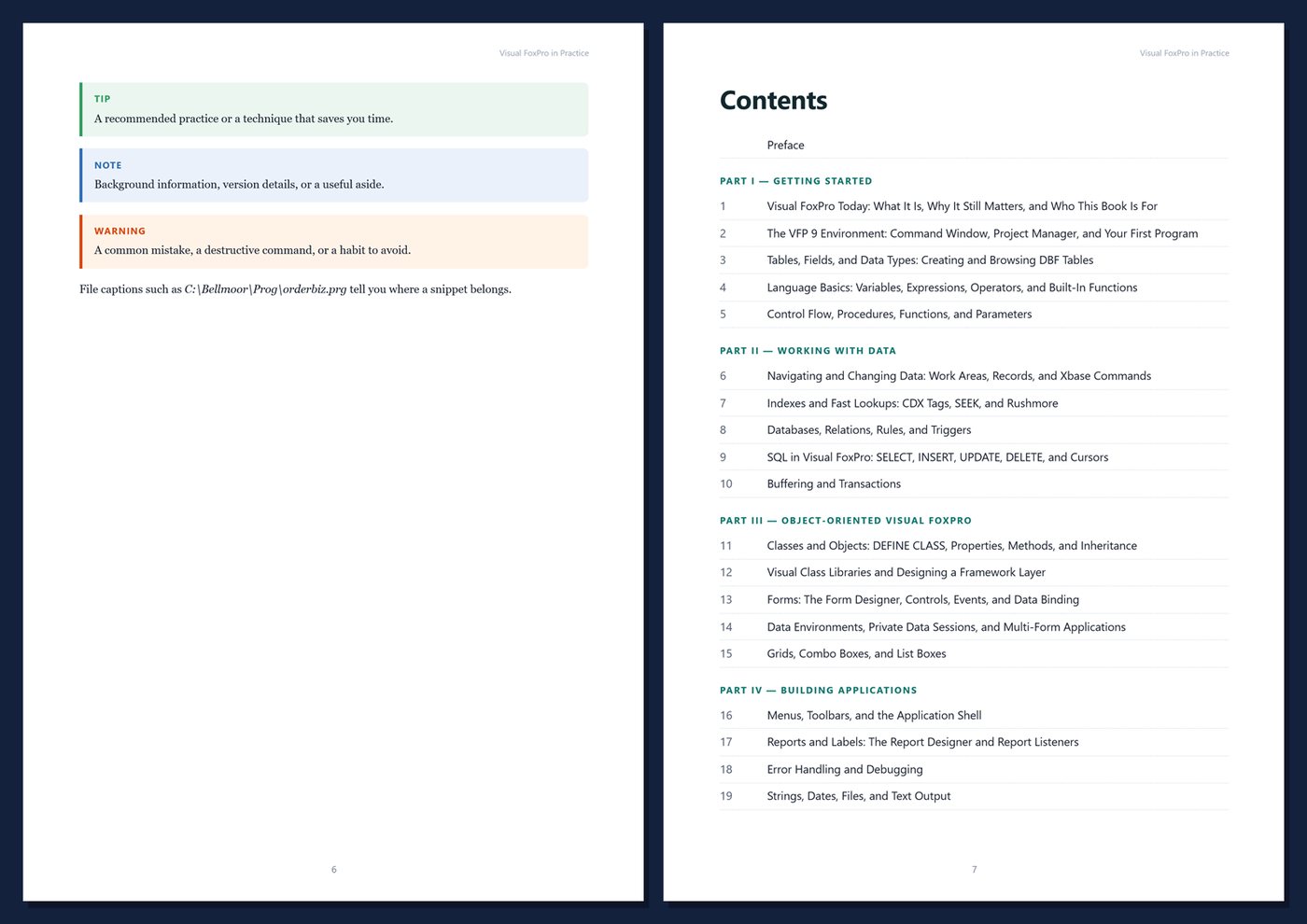
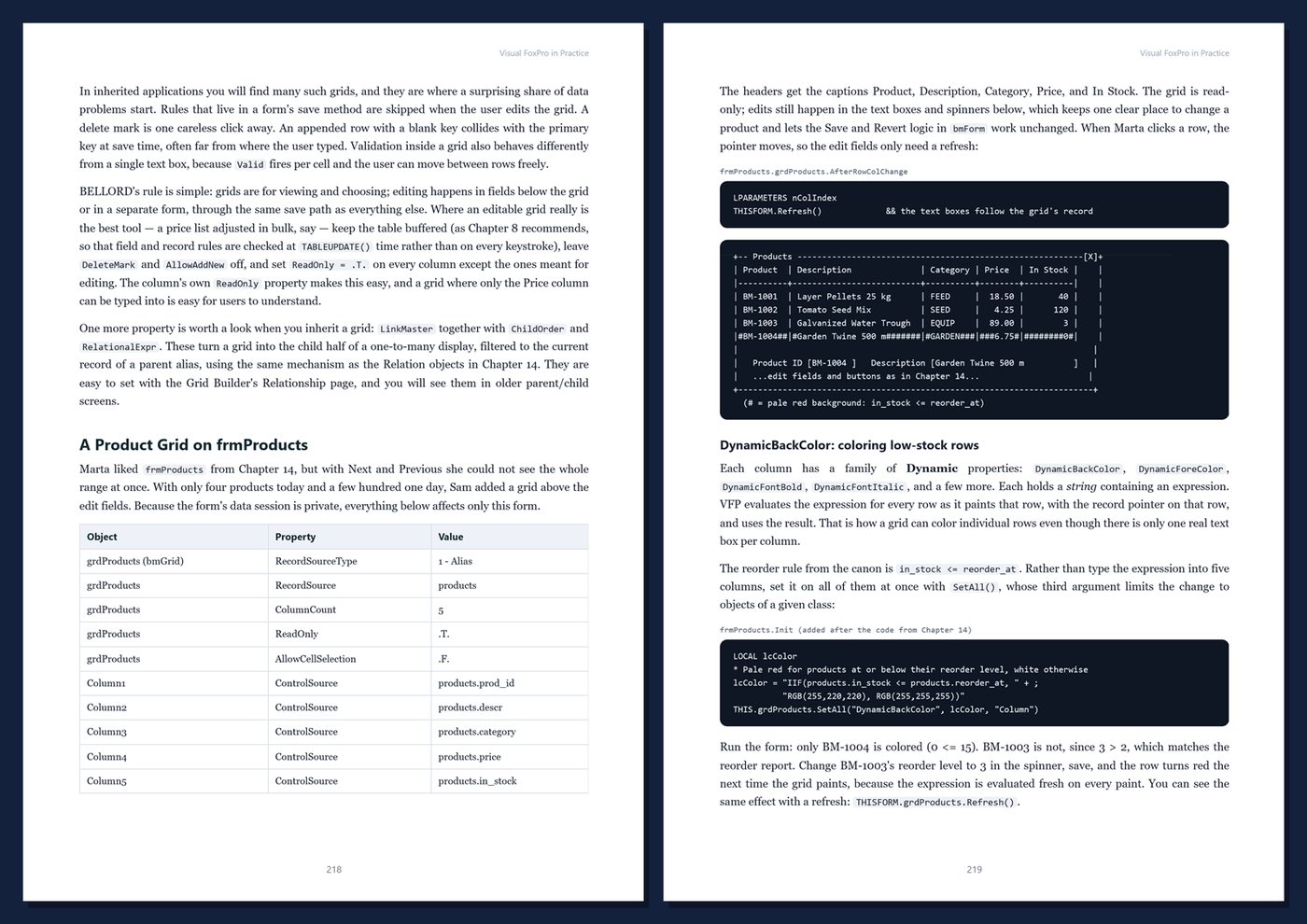
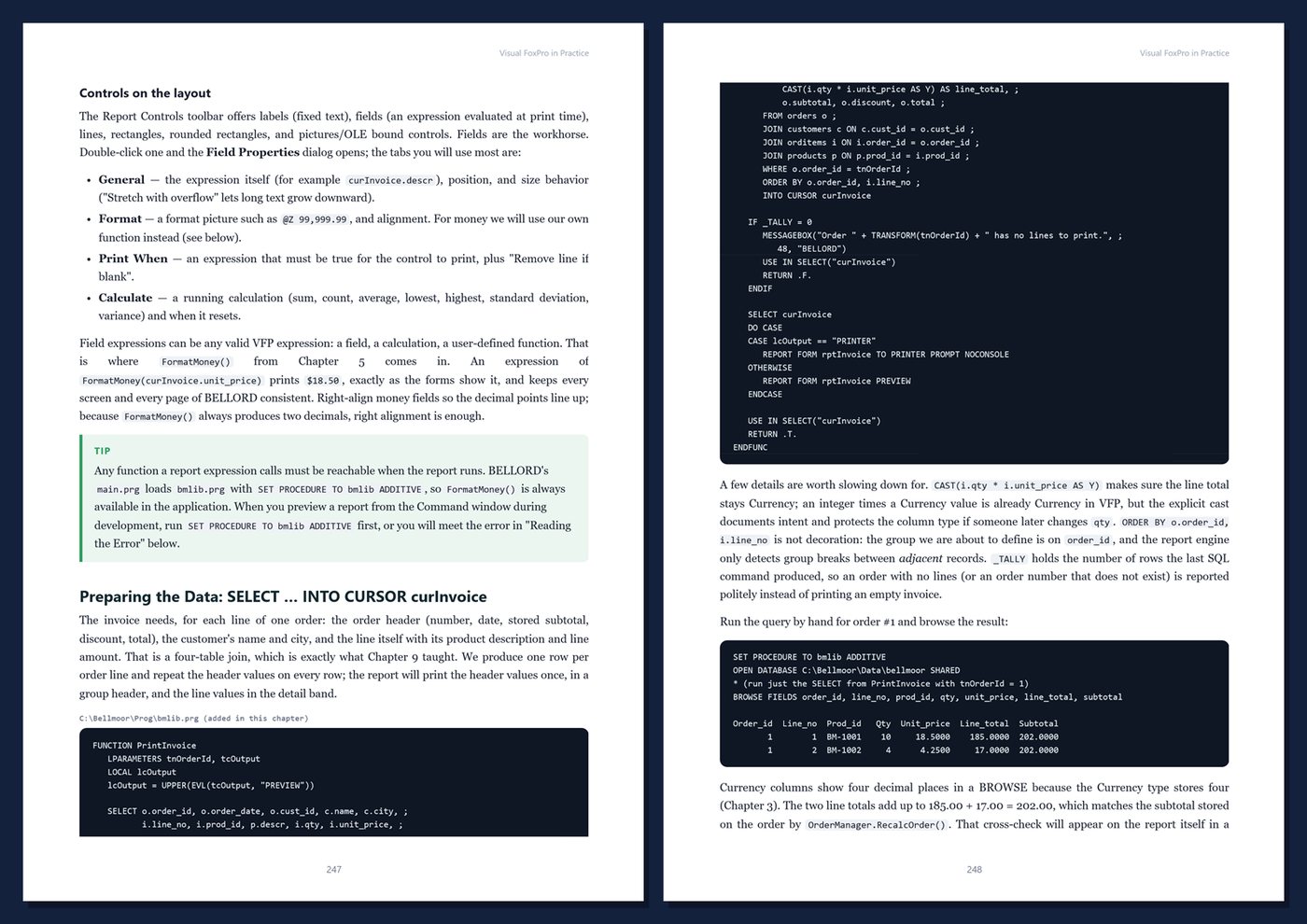
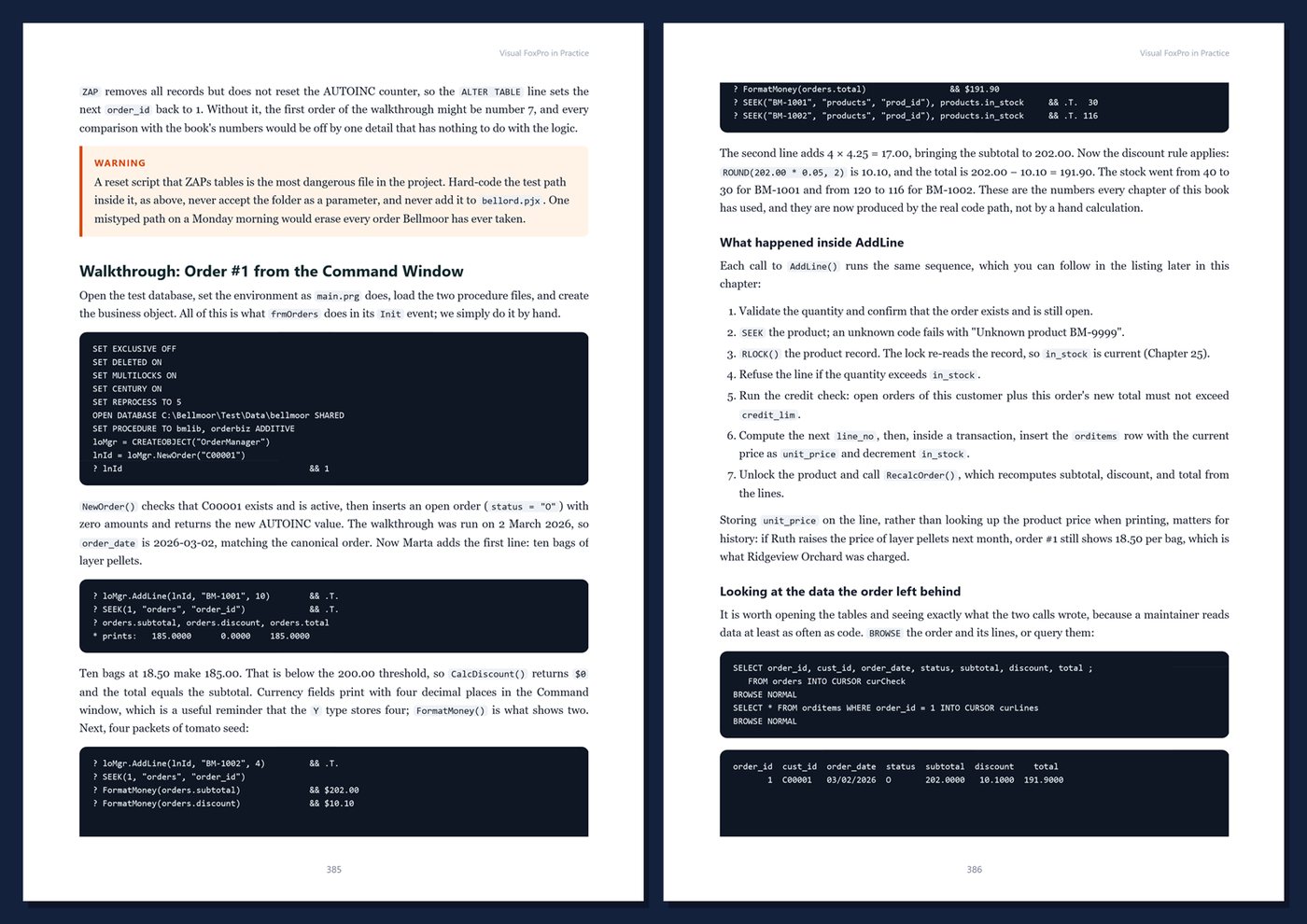
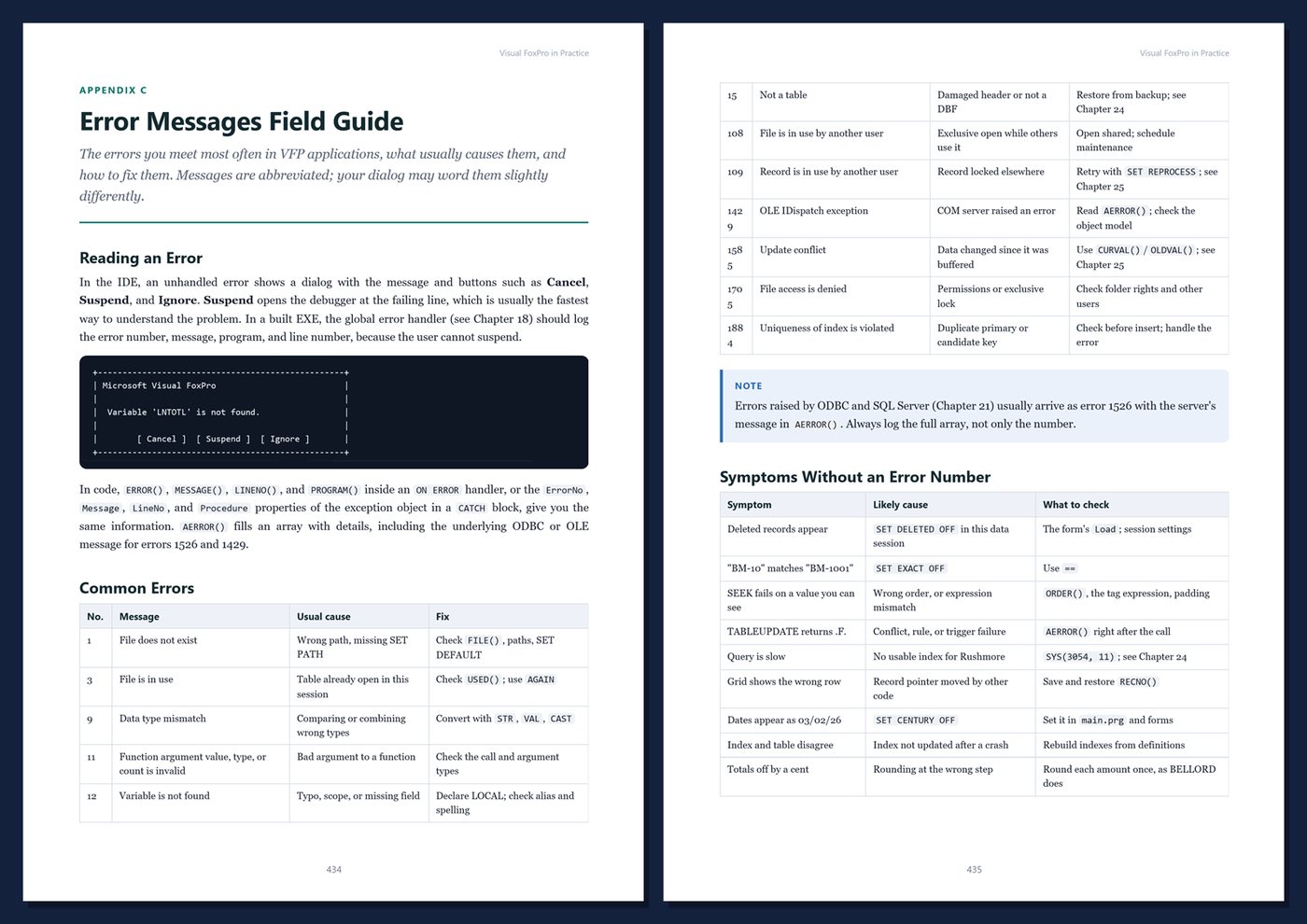
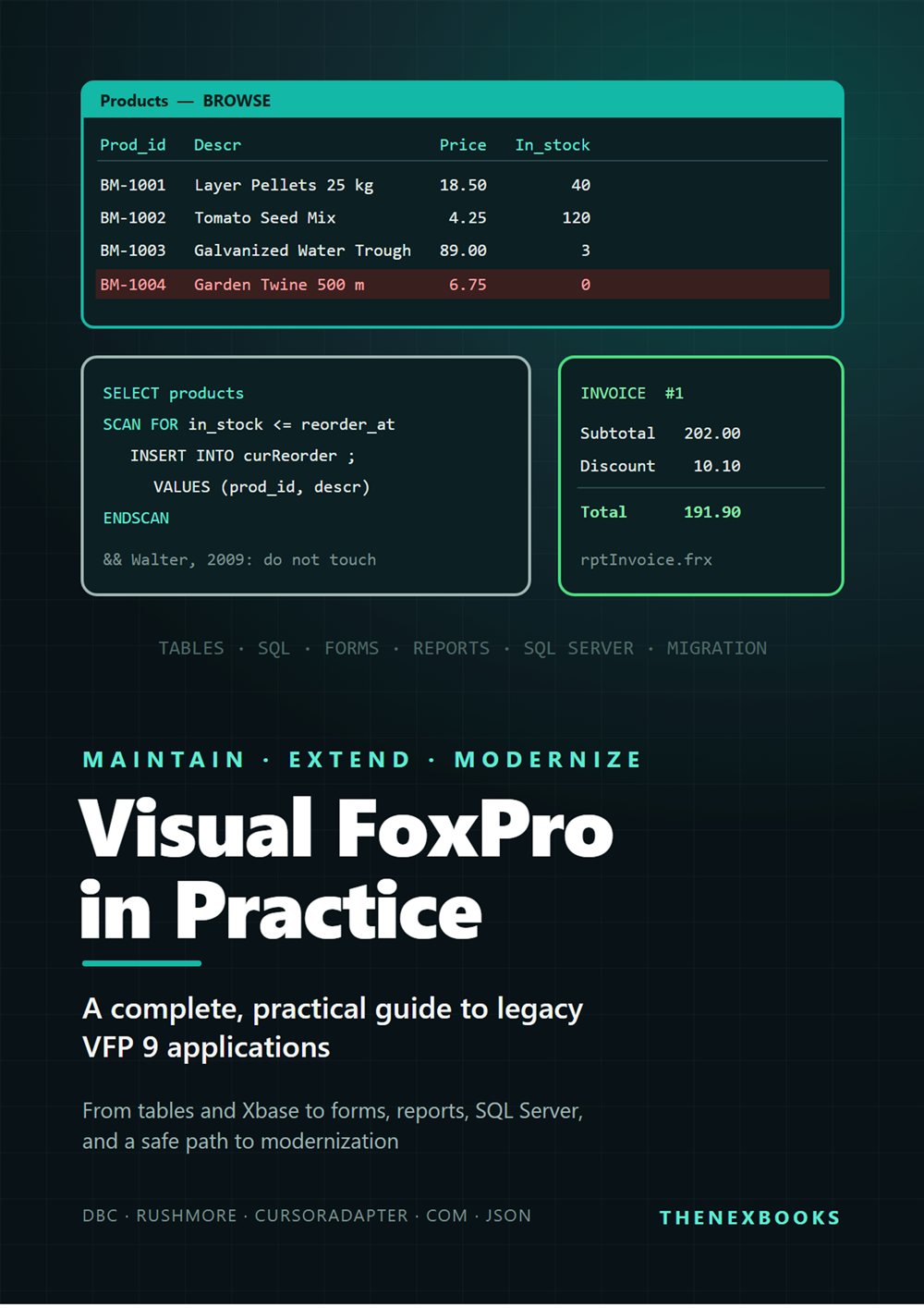
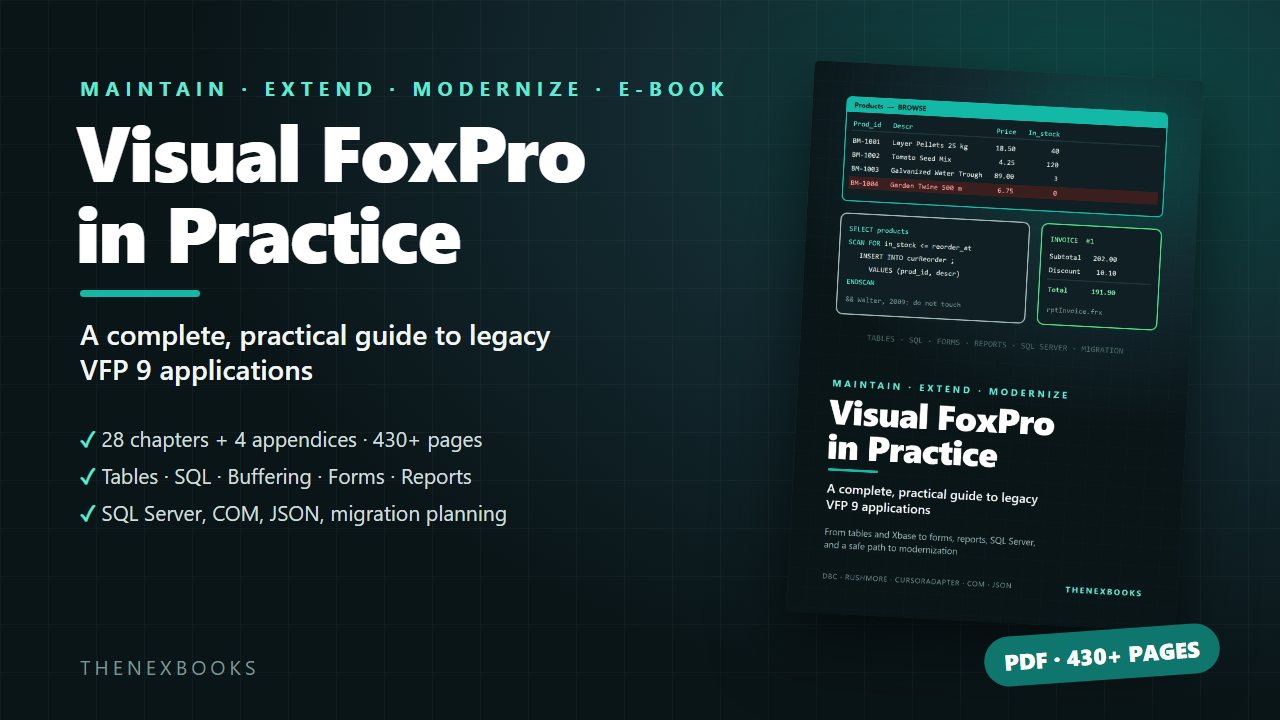
A 438-page, practical guide for developers who inherit, maintain, or modernize Visual FoxPro 9 applications — tables and Xbase, SQL, buffering and transactions, classes, forms, reports, error handling, multi-user locking, SQL Server, COM, JSON, and migration planning.
Maintain, Extend, and Modernize Legacy VFP 9 Applications
Read before you buy: the PDF here is a free sample — the first 20 pages of the 438-page book (payments, sales and reviews on this demo site are sample data). Get the full e-book at thenexbooks on Gumroad.
You just inherited a Visual FoxPro application. Now what?
Visual FoxPro is no longer developed or sold by Microsoft, but many business systems built with it are still running — taking orders, printing invoices, and tracking stock every day. When the original developer has moved on, someone has to understand that code, keep it healthy, add features, and help decide its future. This book is written for that person.
We start from zero — the VFP 9 environment, tables and data types, and the Xbase language — and build up everything a maintainer meets in real applications: work areas and record pointers, indexes and Rushmore, database containers and triggers, SQL, buffering and transactions, classes and visual class libraries, forms, grids, menus, reports, error handling, deployment, and multi-user locking. Then we look outward to SQL Server, COM automation, XML and JSON, data integrity, and practical, low-risk paths to modernize or migrate. Throughout the book you work on BELLORD, the order-entry system of a fictional farm-supply wholesaler, written years ago by a developer who has since retired.
- 438 pages · 28 chapters + 4 appendices · practice exercises in every chapter
- The VFP 9 IDE, tables, data types, and the Xbase language explained from scratch
- Work areas, indexes and CDX tags, SEEK, Rushmore optimization
- Database containers, relations, referential integrity, rules, triggers, and stored procedures
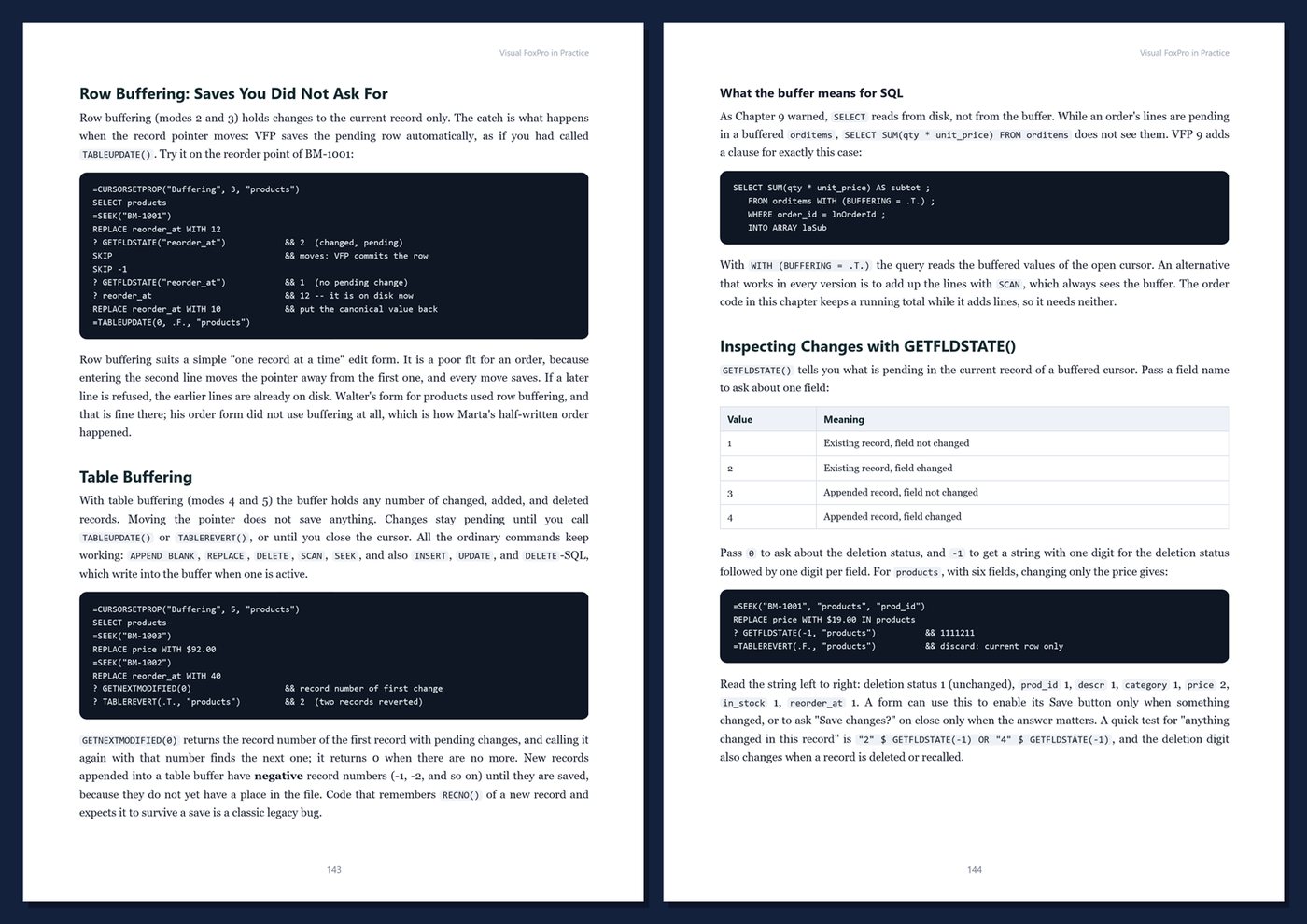
- SQL in VFP, cursors, buffering, and transactions
- Classes, visual class libraries, forms, data environments, private data sessions, grids, and combo boxes
- Menus and the application shell, reports and report listeners, error handling and debugging
- Building and deploying an EXE, multi-user locking, and resolving update conflicts
- SQL Server via ODBC, SQL pass-through, remote views, and CursorAdapter
- COM automation (Excel), the Windows API, XML, JSON, and web services
- Performance, data integrity, corruption prevention, and maintenance routines
- Migration planning (data type mapping to SQL Server and PostgreSQL) and maintaining legacy code with source control and tests
- Quick references for commands, SET settings, and error messages
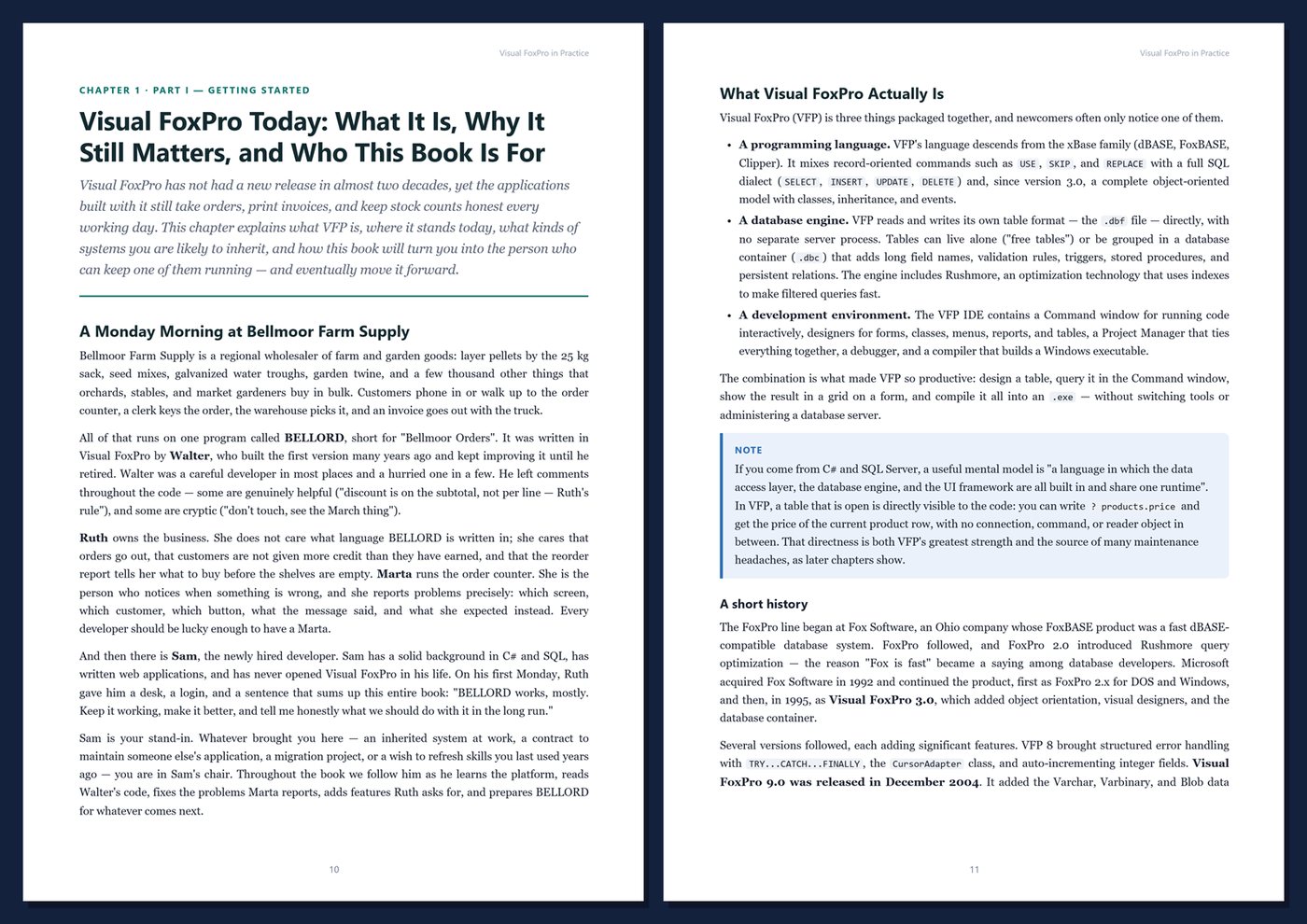
Table Of Contents
Part I — Getting Started
- Ch 1 · Visual FoxPro Today: What It Is, Why It Still Matters, and Who This Book Is For
- Ch 2 · The VFP 9 Environment: Command Window, Project Manager, and Your First Program
- Ch 3 · Tables, Fields, and Data Types: Creating and Browsing DBF Tables
- Ch 4 · Language Basics: Variables, Expressions, Operators, and Built-In Functions
- Ch 5 · Control Flow, Procedures, Functions, and Parameters
Part II — Working with Data
- Ch 6 · Navigating and Changing Data: Work Areas, Records, and Xbase Commands
- Ch 7 · Indexes and Fast Lookups: CDX Tags, SEEK, and Rushmore
- Ch 8 · Databases, Relations, Rules, and Triggers
- Ch 9 · SQL in Visual FoxPro: SELECT, INSERT, UPDATE, DELETE, and Cursors
- Ch 10 · Buffering and Transactions
Part III — Object-Oriented Visual FoxPro
- Ch 11 · Classes and Objects: DEFINE CLASS, Properties, Methods, and Inheritance
- Ch 12 · Visual Class Libraries and Designing a Framework Layer
- Ch 13 · Forms: The Form Designer, Controls, Events, and Data Binding
- Ch 14 · Data Environments, Private Data Sessions, and Multi-Form Applications
- Ch 15 · Grids, Combo Boxes, and List Boxes
Part IV — Building Applications
- Ch 16 · Menus, Toolbars, and the Application Shell
- Ch 17 · Reports and Labels: The Report Designer and Report Listeners
- Ch 18 · Error Handling and Debugging
- Ch 19 · Strings, Dates, Files, and Text Output
- Ch 20 · Building, Distributing, and Deploying Applications
Part V — Integration and Modernization
- Ch 21 · Client/Server: SQL Server, ODBC, SQL Pass-Through, Remote Views, and CursorAdapter
- Ch 22 · COM, Automation, and the Windows API
- Ch 23 · XML, JSON, and Web Services
- Ch 24 · Performance, Data Integrity, and Maintenance
- Ch 25 · Multi-User Applications: Locking, Buffering Strategies, and Conflicts
Part VI — Projects, Migration, and Next Steps
- Ch 26 · Project: The BELLORD Order Entry Application End to End
- Ch 27 · Migrating Data and Planning a Modernization
- Ch 28 · Maintaining a Legacy Codebase and Where to Go Next
Appendices
- App A · Commands and Functions Quick Reference
- App B · SET Commands and Environment Settings
- App C · Error Messages Field Guide
- App D · Glossary
WHO IT IS FOR
Developers who have inherited a Visual FoxPro application (often coming from C#, VB, Java, Python, or SQL); junior developers at companies that still run VFP systems; experienced FoxPro developers who want a structured refresher on VFP 9, client/server, and modernization; and technical leads planning the future of a VFP system.
FORMAT
PDF (A4), 438 pages, English, clickable table of contents and PDF bookmarks. 1st Edition, 2026. Published by thenexbooks.
This book is independent and is not affiliated with, sponsored by, or endorsed by Microsoft. Visual FoxPro, SQL Server, Excel, and Windows are trademarks of the Microsoft group of companies. The book does not include Visual FoxPro software; you need your own licensed copy.
Book details
| Detail | |
|---|---|
| Pages | 438 |
| Format | PDF (A4) |
| Language | English |
| Level | Beginner to Intermediate |
| Edition | 1st Edition, 2026 |
| Download on this site | Free sample, first 20 pages (PDF) |
| Publisher | thenexbooks |
Files you get
No reviews yet. Only buyers can review.
More from thenexbooks